Wondering what to add to your borders this summer? Plantsperson Rosy Hardy has some suggestions - with some of her favourites from her own garden thrown in. From a rambling perennial sweet pea to an impressive red hot poker, her choices are resilient and colourful - perfect for the summer months.
You may also like
The top flowers for July
LATHYRUS LATIFOLIUS
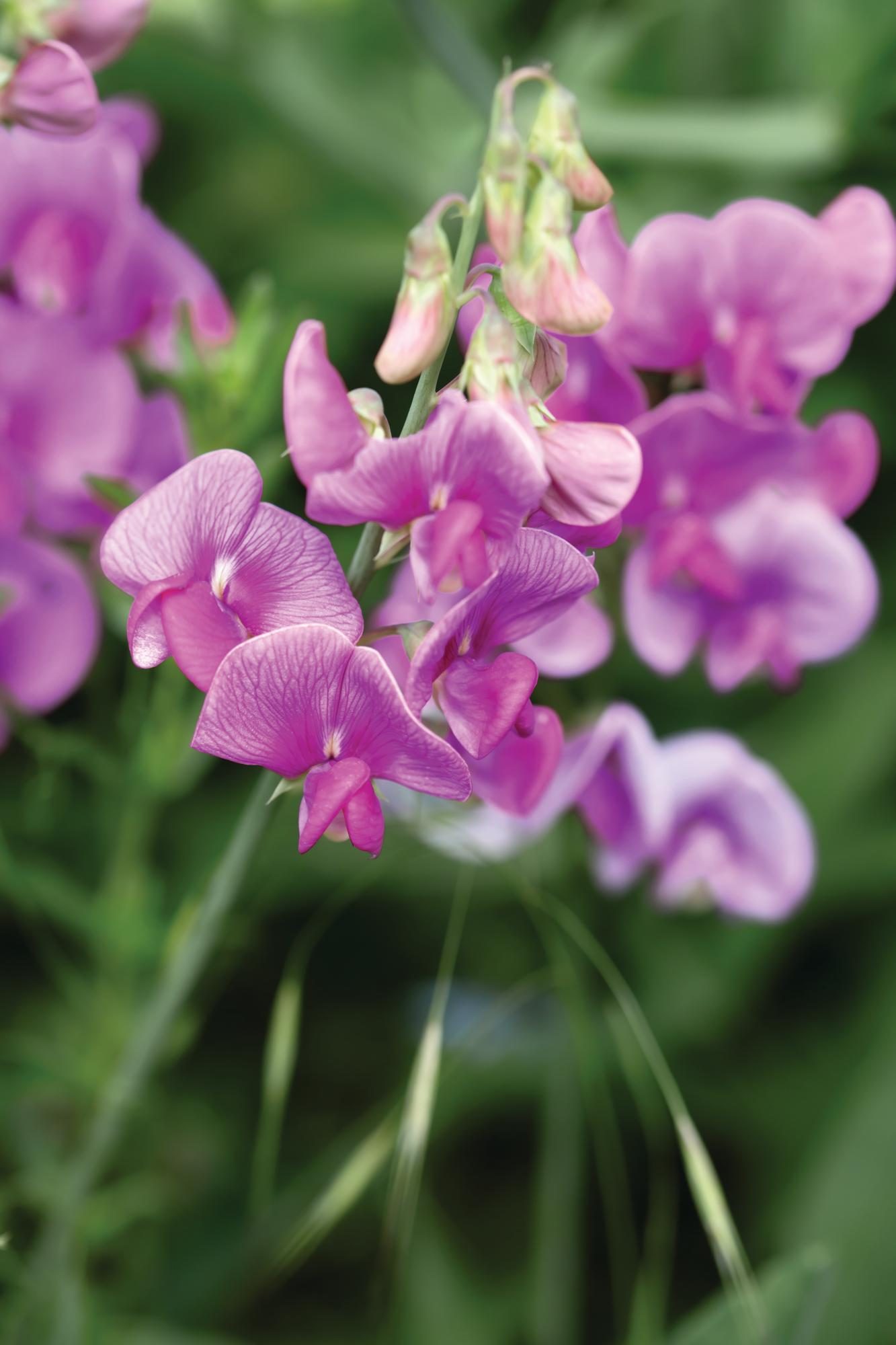
I grow this rambling, perennial sweet pea – dark with pink flowers and midgreen foliage – in my gravel garden and it scrambles around all over the place. If it becomes unruly, I just chop it back and it regrows, flowering on slightly shorter stems. It loves full sun and poor soil, and will self-seed, but is easy to remove and doesn’t seem to regrow from any root left. Train it up a trellis or through shrubs, and in winter take all the old stems to ground level, as it is herbaceous. AGM*.
Height and spread 2m x 50cm–1m. Origin Southern central Europe and northwest Africa. Conditions Moist but well-drained to well-drained soil; full sun to part shade. Hardiness RHS H7, USDA 3a-8b
† Season of interest June – September
GERANIUM PRATENSE

Hardy geraniums have to be one of my favourite garden plants as they are so useful and can be used in many situations in the garden. Known by its common name of meadow cranesbill, this particular one enjoys seeding around either in my gravel garden or in the wild meadow grass. It is an adaptable species that has been used for breeding many good, named varieties, such as the beautiful double form G. pratense ‘Cloud Nine’. A good plant for the border or for a more natural look. Give it full sun and reasonable soil.
Height and spread 60-90cm x 60-90cm. Origin Europe and Asia. Conditions Moist but well-drained to
well-drained soil; full to part sun. Hardiness RHS H7, USDA 4a-8b. Season of interest June – July.
You may also like
ERODIUM MANESCAVII
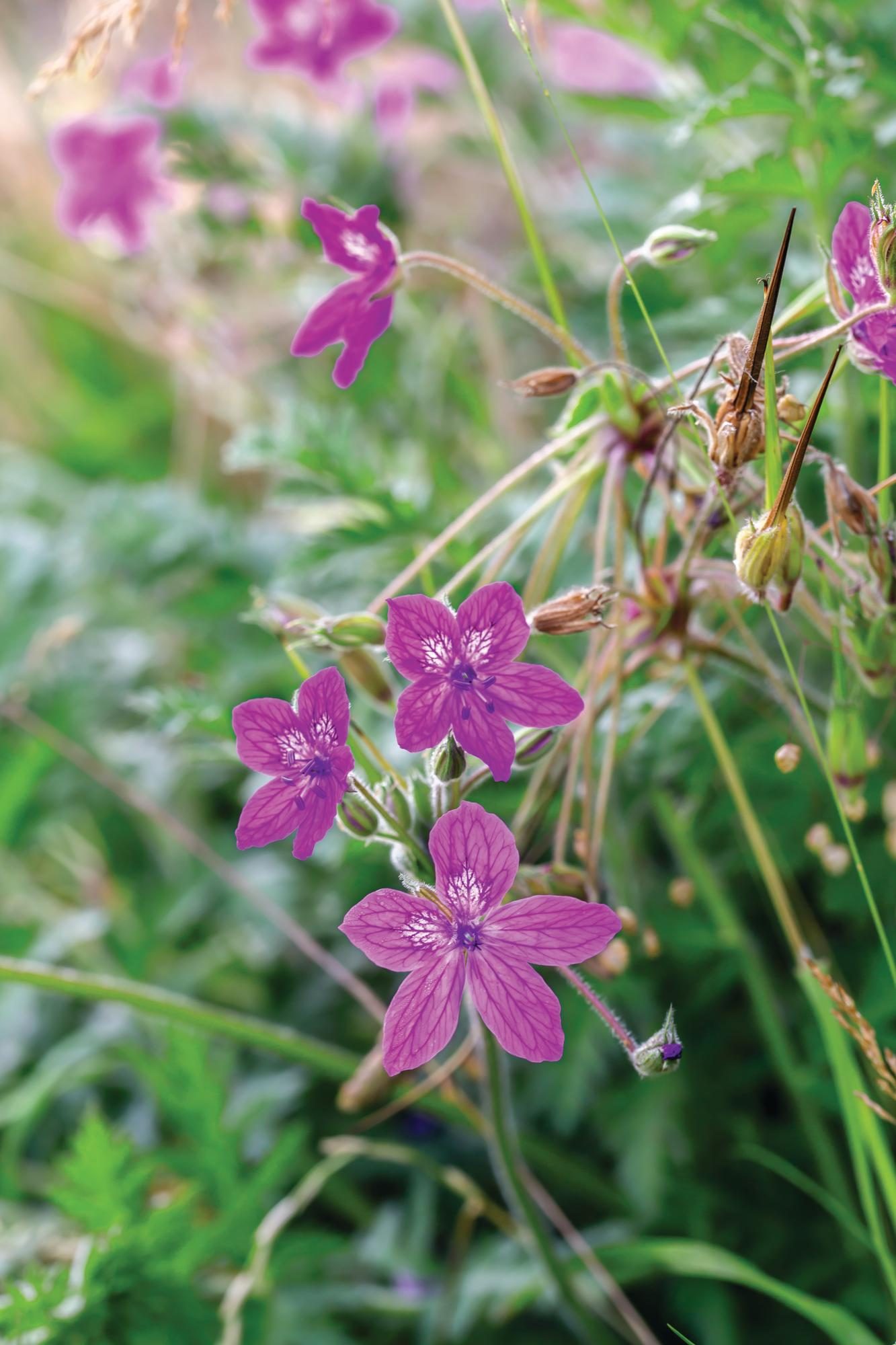
This plant is successful in borders as a front-edge plant or in gravel or scree gardens. It does like full sun but can tolerate morning shade with a freedraining soil. Very hardy and deciduous, it will make good clumps quickly, flowering prolifically throughout the summer. Pulling off dead flower stems regularly will keep the plant looking tidy. They will need replacing probably every five years as they are moderately
short lived. Propagate from seed or by basal cuttings. AGM.
Height and spread 45cm x 45cm. Origin Pyrenees – mountain meadows and limestone slopes.
Conditions Alkaline to neutral well-drained soil; full sun. Hardiness RHS H5, USDA 6a-9b. Season of interest Summer.
CLEMATIS ‘THE PRESIDENT’
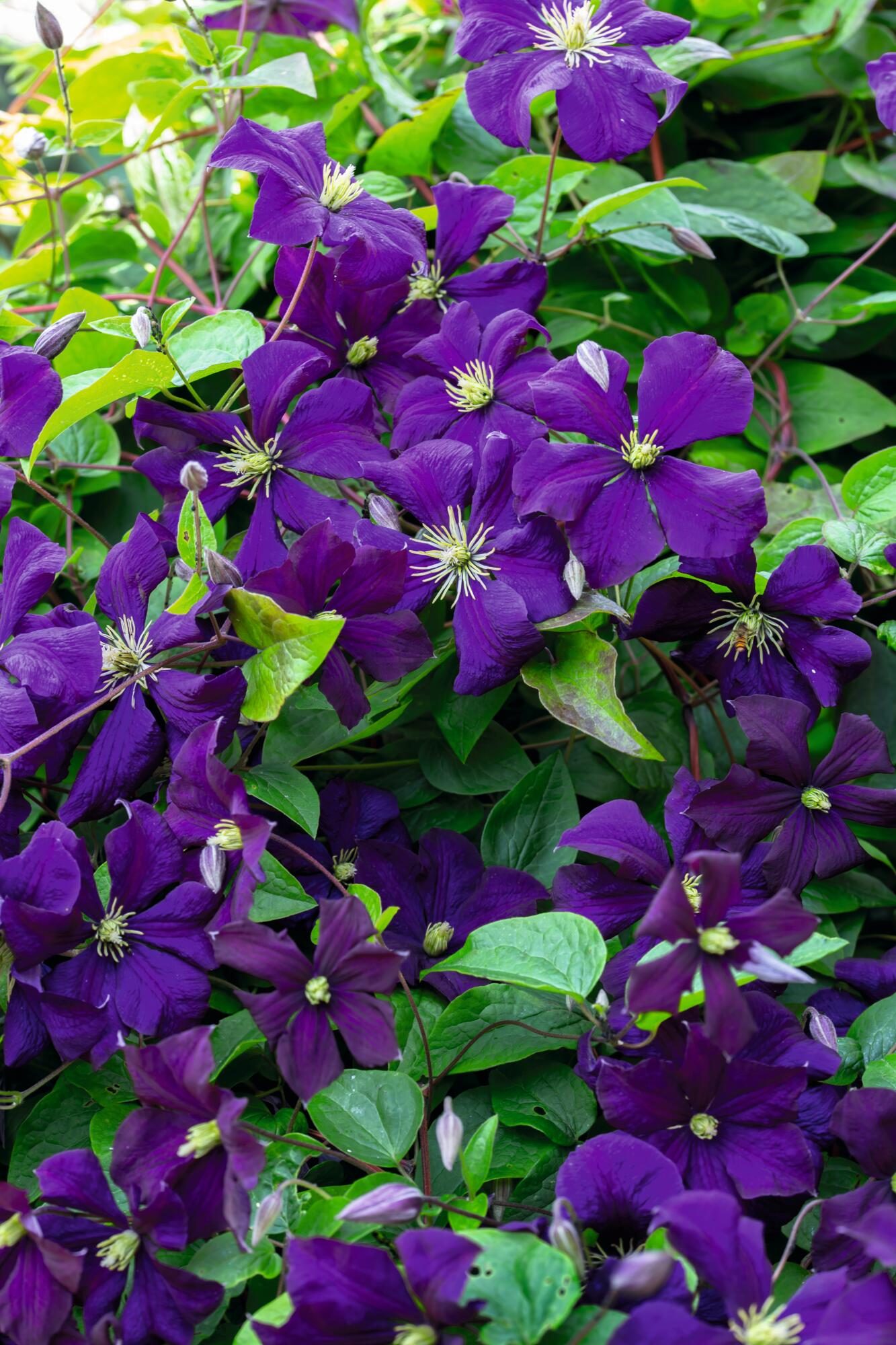
I grow this fabulous dark-purple clematis at the base of an Elaeagnus x submacrophylla, which it uses as a climbing frame, flowering profusely throughout summer. Once it starts to die off, I prune it back hard, giving the Elaeagnus a chance to grow and flower later in the season. The clematis can either be cut to near ground level or slightly higher at about 75cm – I do both, depending on what I can reach –
with no lack of regrowth or flowering.
Height and spread 1.5-2.5m x 50cm-1m. Origin Bred in the UK. Most of the genus originated in Asia, but there are also some that originated in Europe. Conditions Moist but well-drained, alkaline-neutral soil; part sun. Hardiness RHS H6, USDA 4a-8b. Season of interest May – September.
You may also like
- 7 expert tips on how to garden in a heatwave
- The best drought tolerant plants to grow to combat drier summers and warmer weather
FUCHSIA HATSCHBACHII

This fabulous fuchsia should be far more widely grown, as it seems to be resistant to fuchsia gall mite. In the border, it makes a fine shrub that flowers continuously from late June to, and past, the first frosts.
Can be grown in containers, and in many locations may need overwintering under cover, although I leave my pots outside year round and it always regrows. Happy in full sun or part shade, it prefers a free-draining site. Although the individual flowers are not as large as some, it makes up for that with a profusion of blooms. AGM.
Height and spread 1.5m x 1.5m. Origin Brazil. Conditions Moist to well-drained soil; full sun to part shade. Hardiness RHS H2, USDA 7a-11. Season of interest June – September.
VERBASCUM BLATTARIA F. ALBIFLORUM
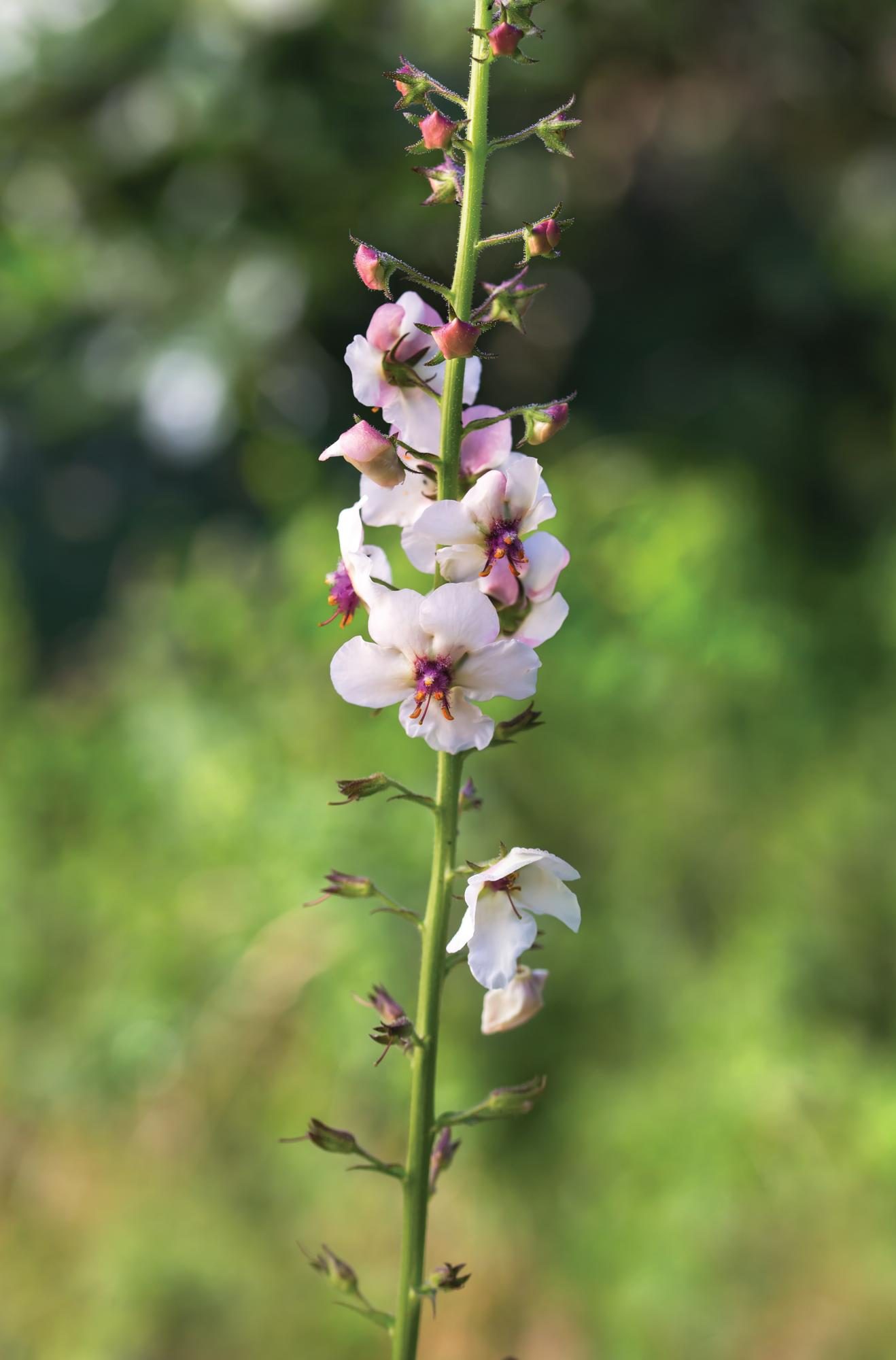
A tall and elegant biennial with large white flowers that have red stamens, and a dark-green basal rosette of long leaves with a crinkled edge. Flower spikes can reach 1.2m, but don’t need staking, and sway in the breeze, continuing that tall white spike effect after the foxgloves have finished. Easy to grow from seed. I allow mine to self-seed in wild grass where they are happy, in full sun. Collect seed for sowing fresh as soon as the pods turn dark brown. Seedlings are easy to remove if not wanted.
Height and spread 1-1.5m x 50cm. Origin Europe, Asia and North Africa. Conditions Well-drained alkaline soil; full sun. Hardiness RHS H6, USDA 5a-9b. Season of interest July – August.
ANACAMPTIS PYRAMIDALIS
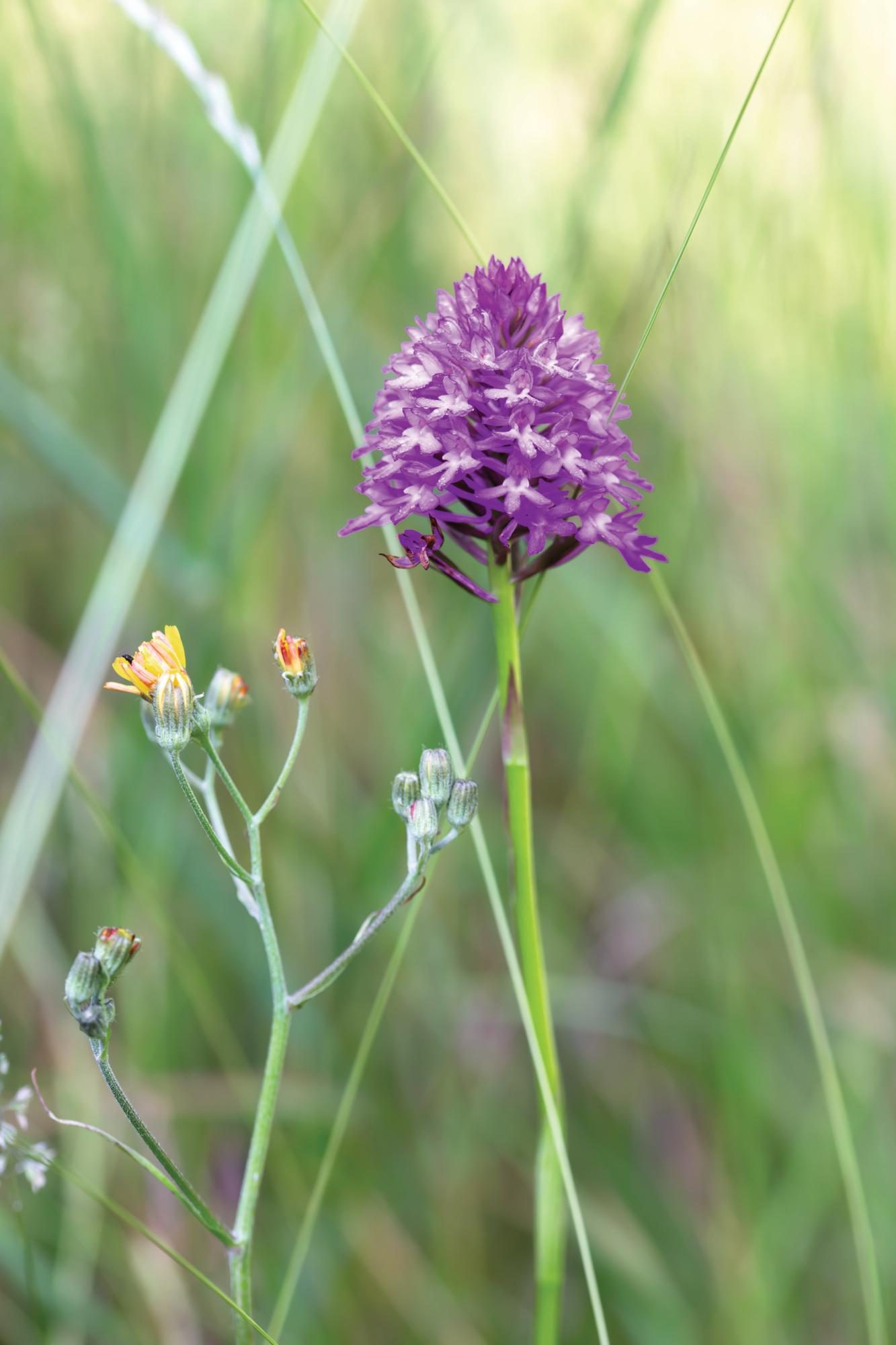
I’m so lucky to have this pyramidal orchid growing in grass at the back of my house. If you allow areas of grass on chalky soils to grow long and only cut once a year, these beautiful native orchids may start to colonise the area. Not everyone has space for this, so when you do see them on roadsides or in a field, marvel at them and enjoy. They don’t always reappear in flower in the same spot each year, as they can rest from flowering for up to three years, which gives the impression they creep around, but they don’t.
Height and spread 10-50cm x 10cm. Origin Western Europe and the Mediterranean to Iran and North Africa. Conditions Alkaline to neutral, well-drained soil; part shade. Hardiness RHS H5, USDA 5a-9b.
Season of interest June – August.
You may also like
KNIPHOFIA ‘AMSTERDAM’

This beautiful red-hot poker has soft orange tubular flowers that fade to yellow as it ages. Tall flower stems, which don’t need staking, arise from linear, grass-like foliage that creates a medium-sized clump. The soft-orange colour makes it easy to fit into border planting schemes. It’s a great statement plant for the middle of a summer border and a magnet for pollinating insects. The foliage isn’t too bulky so, once the flowers are spent, you still have a structural plant.
Height and spread 1m x 75cm. Origin Garden (species South Africa). Conditions Fertile, moist but free-draining loamy or sandy soil, slightly alkaline to slightly acidic; full sun. Avoid waterlogging. Hardiness RHS H5, USDA 5a-9b. Season of interest July – August.
TEUCRIUM MONTANUM
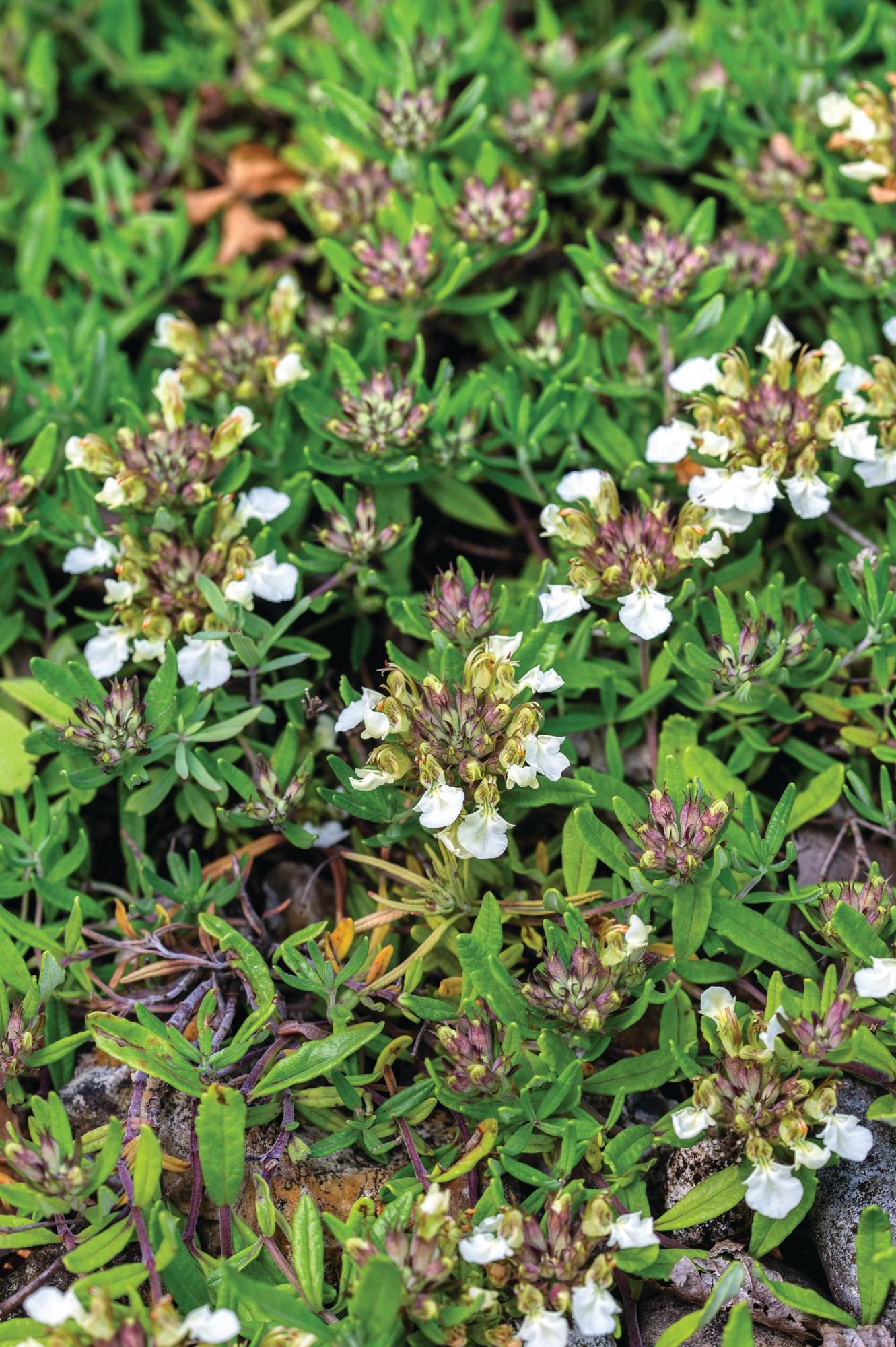
This low-growing but spreading plant is for very free-draining soil and a sunny position. Gravel gardens or alpine scree and troughs are excellent for it. The pale, yellow-cream flowers are held over green-grey foliage in midsummer. It is evergreen, and the leaves are narrow and slightly scented. Once it has finished flowering, it’s a good idea to cut off dead flowers and prune to tidy it up. This will encourage new growth. It is one of those underused, versatile front of border plants and is very tough.
Height and spread 30cm x 60cm. Origin Southern Europe from Spain to Turkey. Conditions Neutral to alkaline, well-drained or gritty soil; full sun. Hardiness RHS H6, USDA 5a-9b. Season of interest June – September.
EUPHORBIA SEGUIERIANA
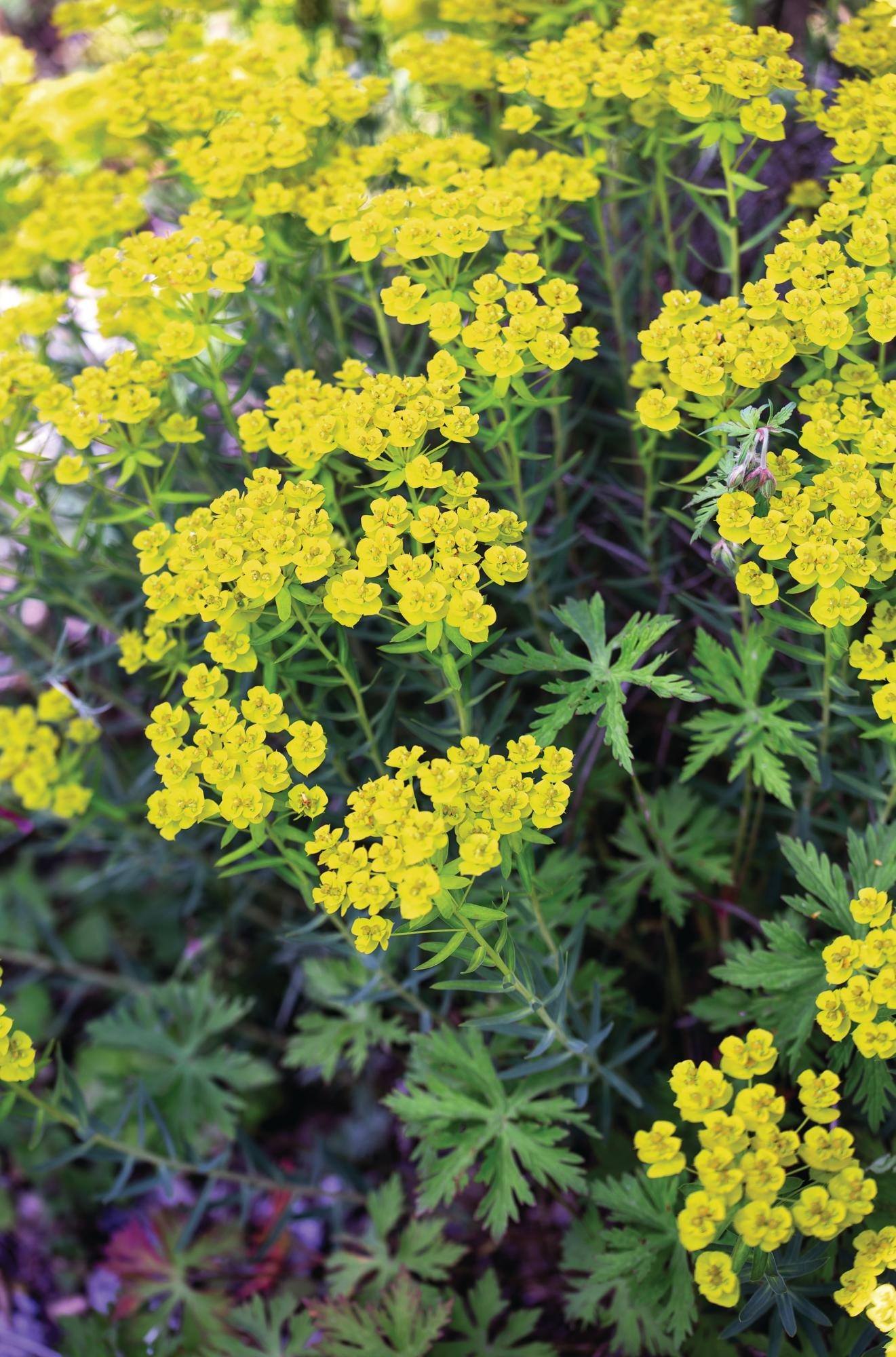
If you don’t have space for a large growing euphorbia but love the limegreen inflorescences, why not try this beauty. Its blue-grey foliage contrasts so well with the flowering stems, and is really one of those plants that can cope with all the changing weather we seem to be having. Give it full sun and a freedraining, almost builder’s-rubble-type soil and it will be very happy. It can self-seed, but hasn’t for me. It’s suitable for growing in a container, is pest resistant and also doesn’t require much in the way of care.
Height and spread 55cm x 50cm. Origin Europe and east to Pakistan and Western China. Conditions Well-drained soil; full sun. Hardiness RHS H5, USDA 4a-10b. Season of interest June – August.
*Holds an Award of Garden Merit from the Royal Horticultural Society.
