In 2007 I began work on a garden that sits at the head of a rain-drenched valley in the Lake District. Here, winters are less than forgiving and for a perennial to flourish, or at the very least survive, it needs abundant resilience. The early planting experiments I made – sometimes fruitful, sometimes not – engendered in me a deep respect for many of these tough perennials, and influenced those I grow to this day.
Garden worthiness needn’t mean sacrificing any of the tempting qualities of less hardy plants or inviting a range of bland specimens into your borders. Grasses are an excellent place to start, and robust, clump-forming types (of which there are many) are indispensable. A favourite of mine is Panicum virgatum ‘Warrior’. Slow to emerge in the spring, it has streaked foliage that matures to produce flower heads with a sumptuous metallic-purple lustre and its winter effect is also highly decorative.
You may also like:
- Want a stunning summer border? Here are four beautiful flower combinations
- Sow a border from scratch

Grasses complement a multitude of perennials. Linaria purpurea ‘Canon Went’, for example, produces spikes of highly delicate, creamy-pink flower heads in early summer. This garden stalwart will flower reliably until late autumn and is easily raised from seed. Thalictrum ‘Elin’ – a hybrid between T. flavum subsp. glaucum and T. rochebruneanum – has a similarly ephemeral nature but is significantly larger. Its light frame is deceptively strong and from early to midsummer the flower clusters resemble clouds of mauve and cream.
Less statuesque planting can still achieve something visually striking
Less statuesque planting can still achieve something visually striking. The euphorbias include an often overlooked, low, clump-forming species: Euphorbia epithymoides, which produces round flat heads of luminous green, sulphurous yellow bracts in early spring, setting off the inconspicuous flowers. If light levels are a struggle then Omphalodes cappadocica ‘Cherry Ingram’ with a low-growing habit is characterised by numerous intense electric-blue flowers, synonymous with the borage family.
I first came across the melancholy thistle Cirsium heterophyllum driving down a semi-derelict track in the Yorkshire Dales where it shot through the fallen remains of a dry-stone wall. It’s an endemic plant that needs containing as it spreads by highly enthusiastic runners. A bottomless plastic container sunk into the soil to contain the runners works very effectively. Your efforts will be rewarded by the multitude of long-lasting thistle heads that appear from midsummer until early autumn and which are divine.

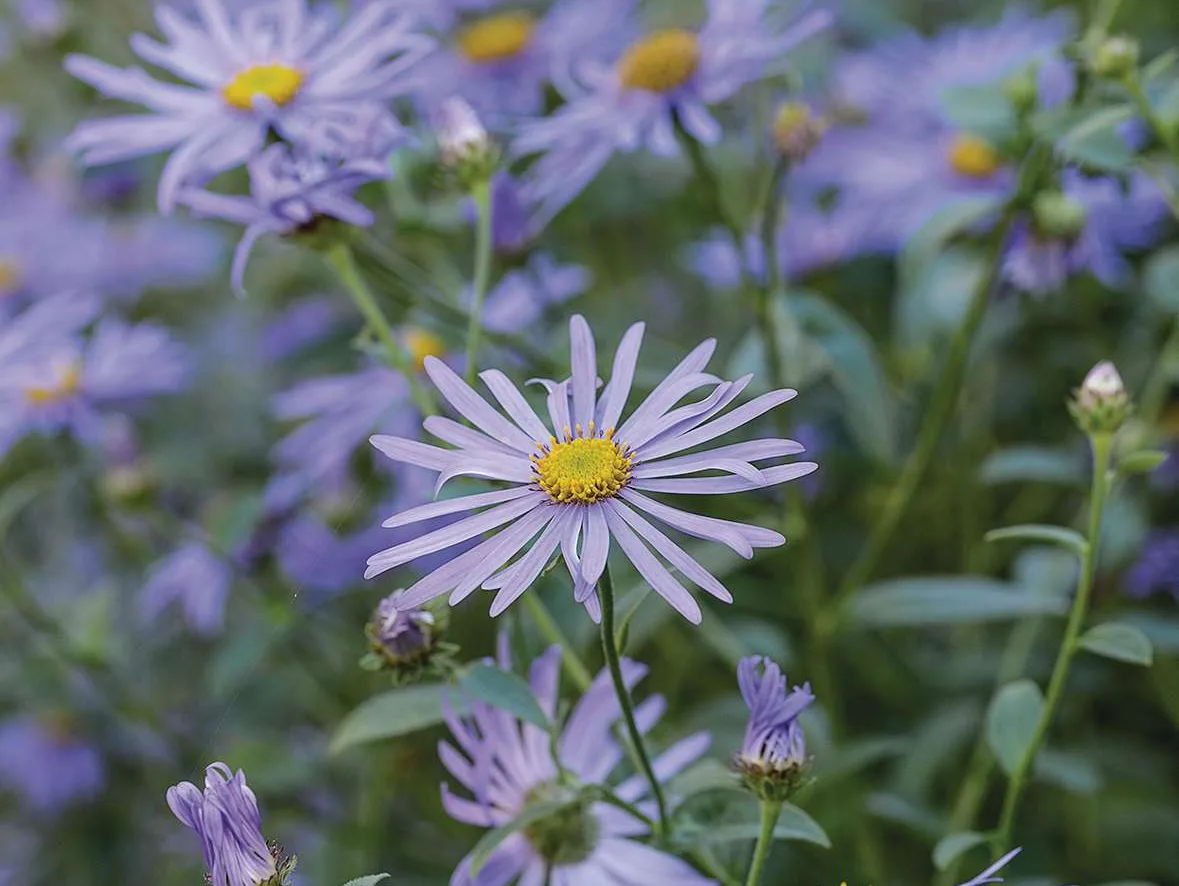
Umbellifers are highly distinctive plants and include a black-leaved form of our inherently tough native cow parsley: Anthriscus sylvestris ‘Ravenswing’. I adore this plant and enjoy contrasting its dark foliage with the spike-like, pink racemes of Physostegia virginiana ‘Rosea’ and often pair both with hardy asters to extend the summer display well into autumn’s grasp. Aster x frikartii ‘Mönch’ described by horticulturist Graham Stuart Thomas as ‘the finest aster for long display’ is impossible to fault, as is Symphyotrichum novi-belgii ‘Little Pink Beauty’, an aster that keeps you waiting until its flowers are revealed in September followed by an extremely handsome October crescendo.
You may also like
Late-summer spectacles should include the subtle beauty of Succisella inflexa ‘Frosted Pearls’, with its small, spherical, pale-lilac flower heads that float above a matrix of stalks. For the poorest-quality ground Teucrium hircanicum is an enduring plant that will reliably produce masses of rich-purple flowers throughout the summer and autumn, attracting countless insects. I use teucriums where salvias, even hardy ones, would struggle. Potentilla ‘Gibson’s Scarlet’ with its fiery crimson flowers has a low, semi-scrambling nature and the two planted together will jostle beautifully for space. Far from being in the minority, plants such as these that will succeed against the odds are vast in number, and these often underused fail-safe plants deserve to be grown and celebrated far more.
21 plants for fool-proof borders
#1 Aster x frikartii ‘Mönch’
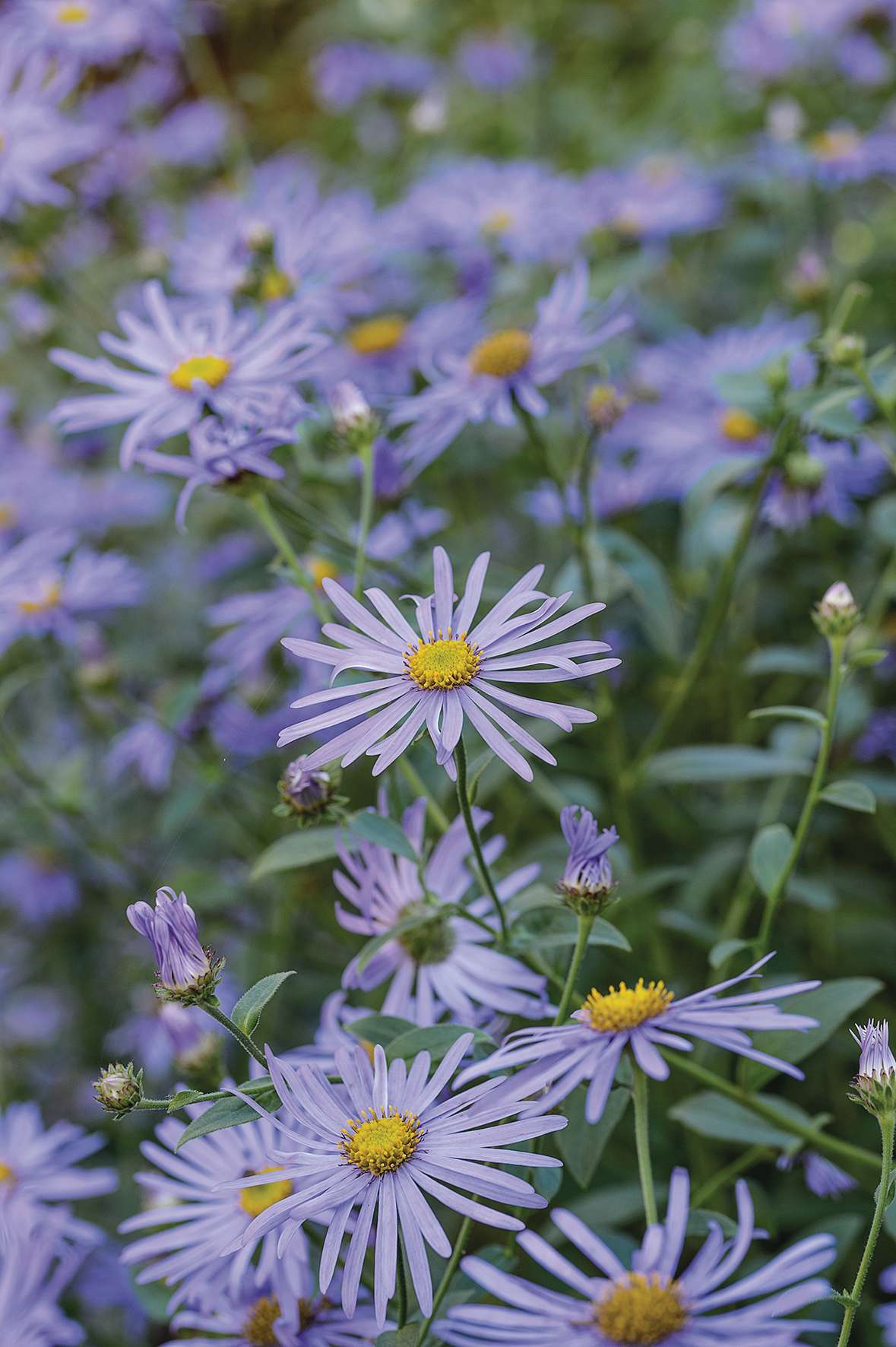
Yellow-centred daisies surrounded by strongly coloured, lavender-blue petals. Easily rooted from cuttings in the spring. Nectar- and pollen-rich flowers attract masses of insects from late summer until the first frosts.
50-90cm x 30-90cm. AGM*. RHS H7, USDA 5a-10b †.
You may also like:
#2 Arenaria montana
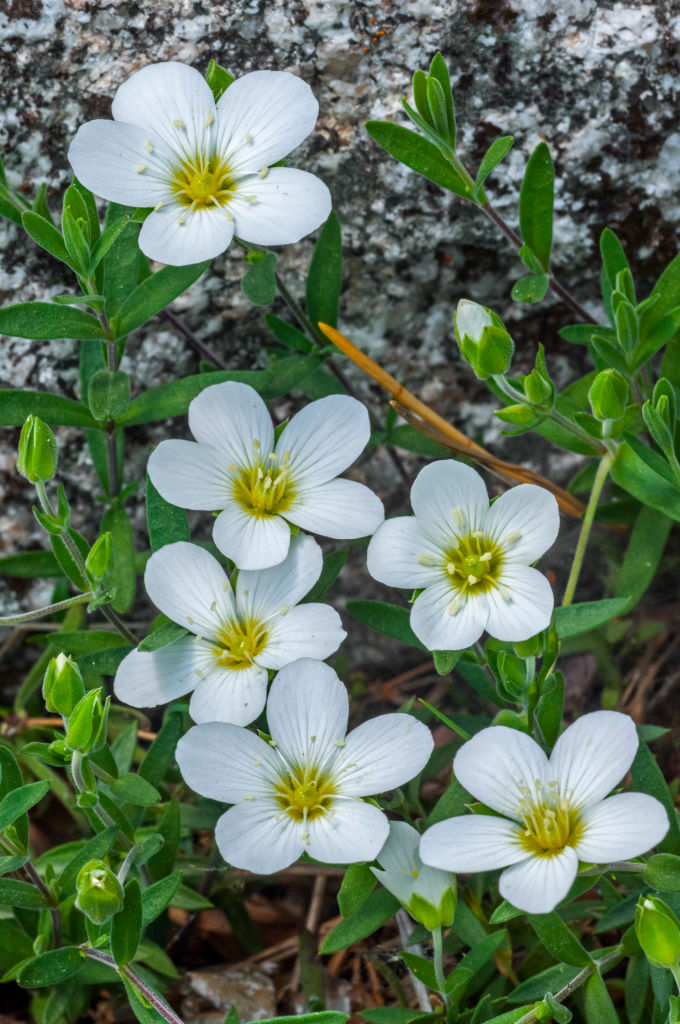
A great plant for rockeries and well-drained borders. Produces spectacular, flower-laden cascades of evergreen foliage. Best raised from seed in the spring.
10-20cm x 50cm. AGM. RHS H5, USDA 4a-8b.
#3 Anthriscus sylvestris ‘Ravenswing’

A cow parsley with dark leaves that show off the distinctive white flowers. If the foliage needs refreshing, cut it back to produce another crop. It perpetuates by self-seeding.
1-1.5m x 50cm. RHS H6, USDA 3a-10b.
#4 Cirsium heterophyllum

The melancholy thistle (supposedly a cure for sadness) produces intensely coloured, purplepink heads on stout silver stems. A magnet for bees and admiring glances. Prefers a sunny position.
1-1.2m x 1.5m. RHS H7, USDA 5a-8b.
You may also like:
#5 Euphorbia epithymoides
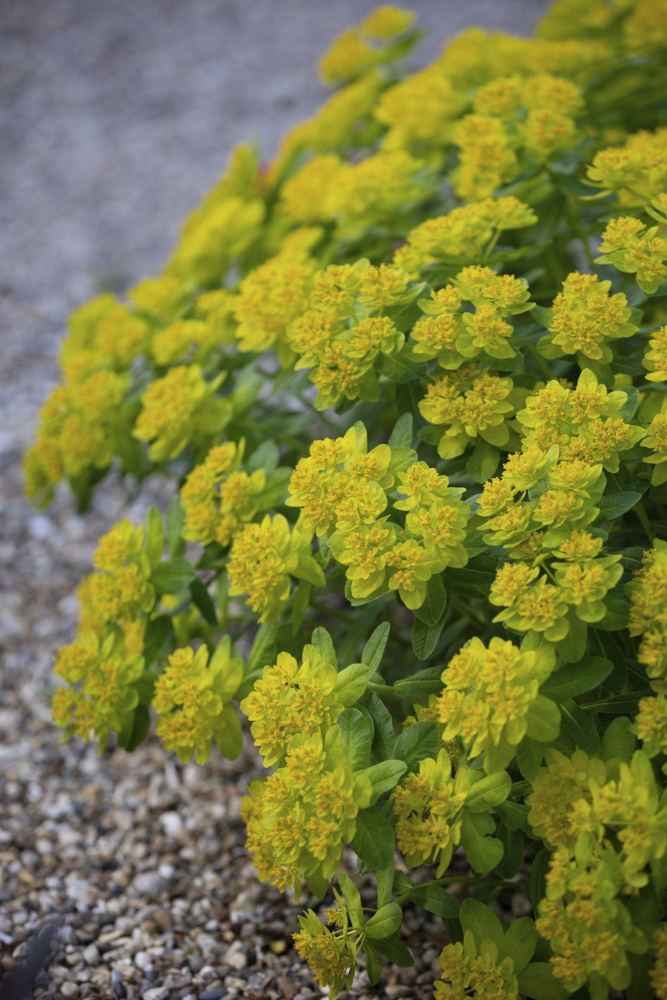
New leaves glow with a green luminosity in early spring to contrast with fresh growth of neighbouring perennials. Best raised from seed in well-drained soil; will sulk in overly wet ground.
25cm x 30cm. RHS H5, USDA 4a-8b.
#6 Geranium Patricia (= ‘Brempat’)
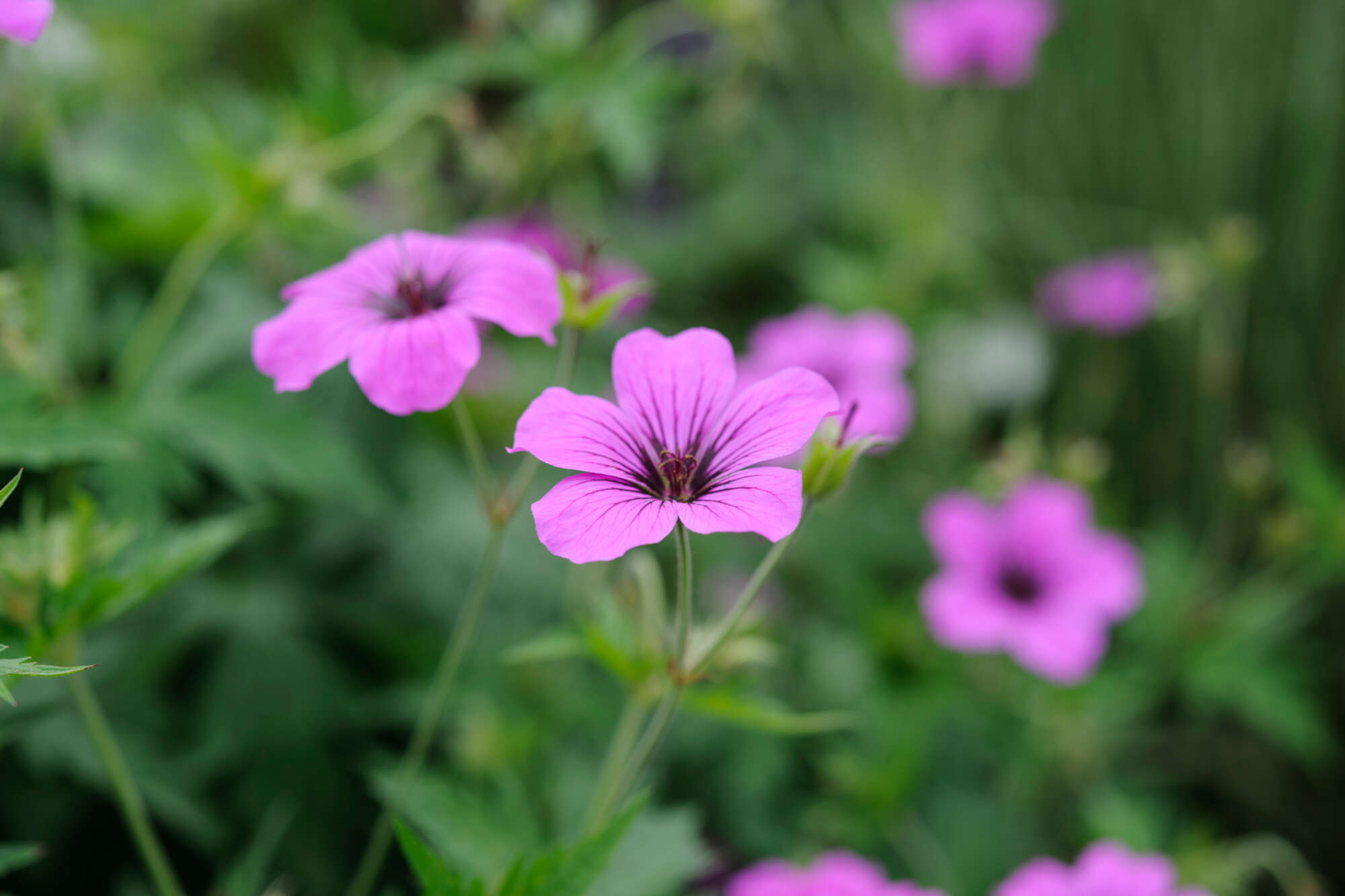
A strong-growing cross between G. psilostemon and G. endressii that personifies hybrid vigour. Stunning cerise flowers with intensely dark centres 4cm across.
70cm x 70cm. AGM. RHS H7, USDA 4a-8b.
#7 Aquilegia vulgaris var. stellata ‘Nora Barlow’
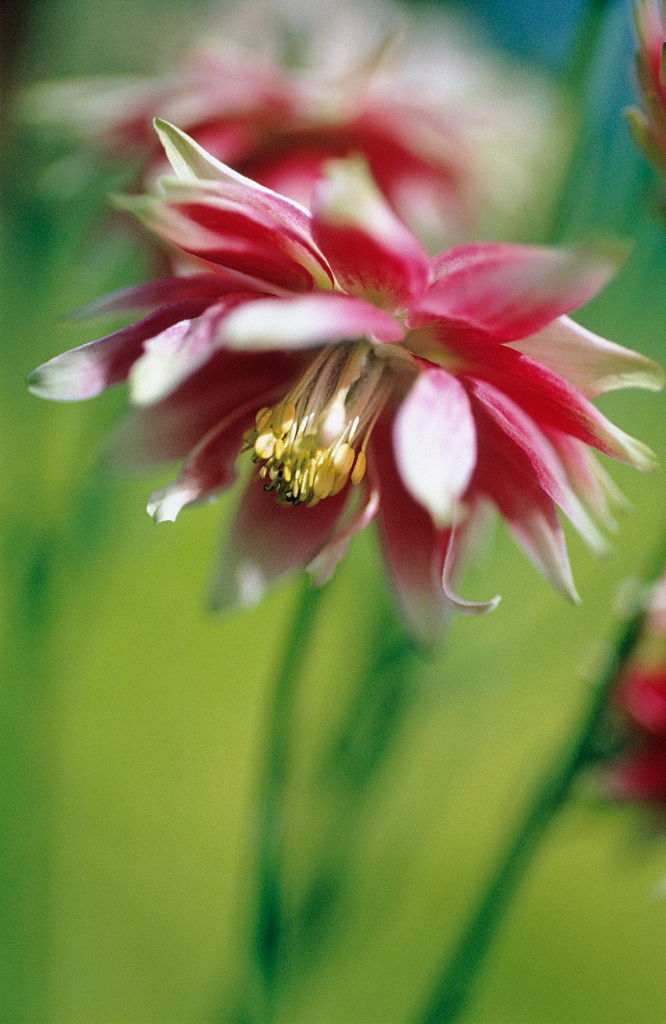
Adaptable to both sun and shade, this robust plant need not be confined solely to the cottage garden. Double flowers, suffused red, pink and green in May and June.
90cm x 40cm. RHS H7, USDA 3a-8b.
You may also like:
- Don't give up on your crispy, yellow lawn - here's how to make it green again
- Adapting to drought: how we should be gardening
#8 Succisella inflexa ‘Frosted Pearls’
A relative of devil’s bit scabious, this adaptive perennial grows in the poorest depths of soil. Its pale-lilac flowers open well into October. A good food source for bees.
90cm x 90cm. RHS H7, USDA 5a-8b.
#9 Omphalodes cappadocica ‘Cherry Ingram’

The intensity of the blue colour on its forget-me-not like flowers cannot be overstated. Flowers are held in short sprays over clumps of smooth lanceolate leaves.
20cm x 30cm. AGM. RHS H6, USDA 6a-9b.
#10 Linaria purpurea ‘Canon Went’

Pale-pink flower spikes atop blue-green stems teem with insects from June to September and make excellent cut flowers. Well-drained soil, preferably in sun.
90cm x 30cm. RHS H6, USDA 5a-9b.
#11 Symphytum ‘Hidcote Blue’
Extremely useful as a dense ground cover plant. Unrolling croziers of red buds change to blue and white tubular flowers that emerge from April through to early June.
45cm x 90cm. RHS H7, USDA 4a-8b.
#12 Panicum virgatum ‘Warrior’
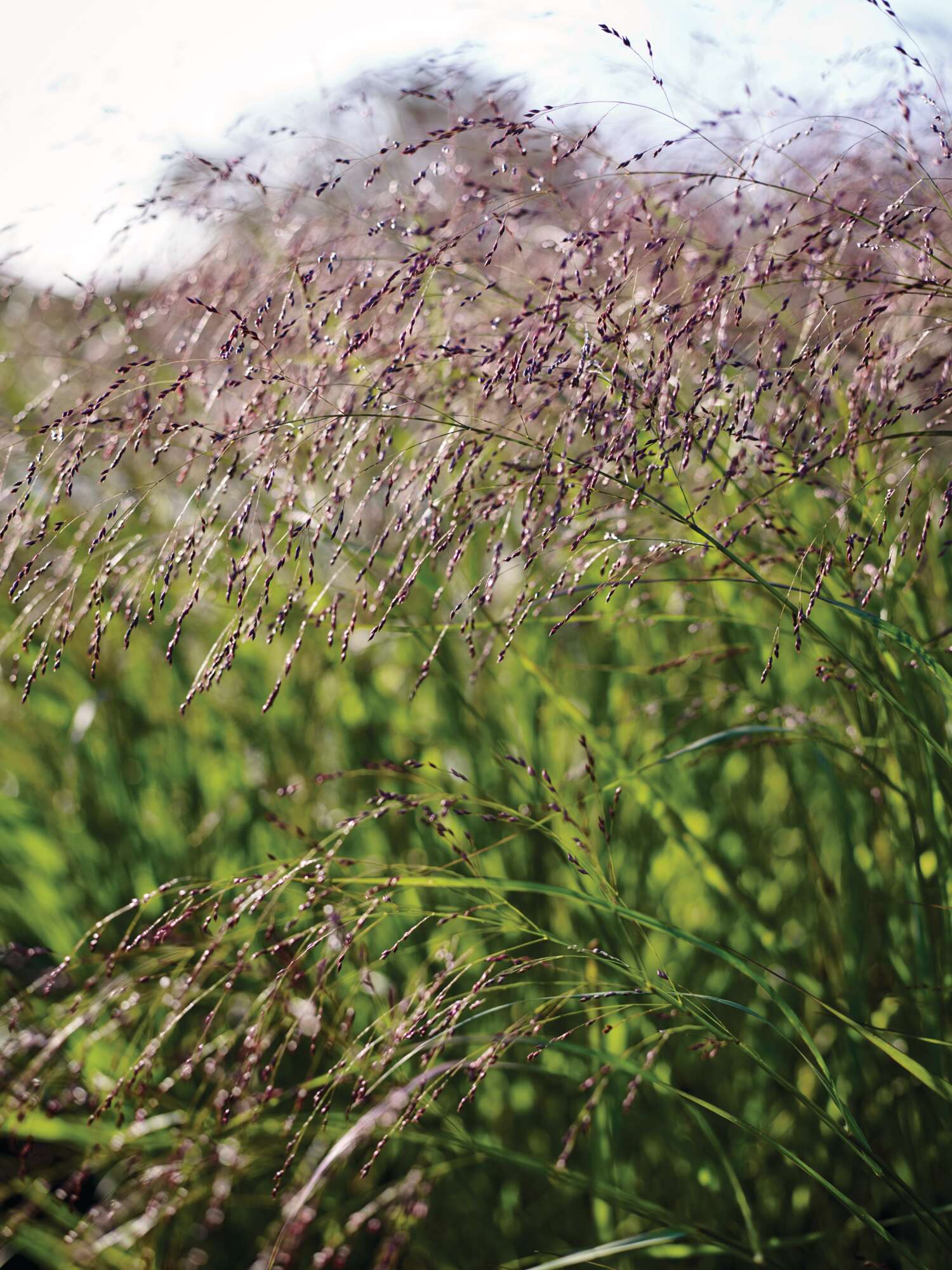
Clump-forming grass with green and purple foliage that intensifies in colour throughout the season. Produces purple flowers that flower freely all summer. Attractive winter structure.
1.4m x 60cm. RHS H7, USDA 5a-9b
#13 Physostegia virginiana ‘Rosea’

Forms a dense mat of impressive flowers in summer and autumn. The individual flowers, which are arranged in four vertical tiers, move as if on a ball and socket joint.
70cm x 35cm. RHS H6, USDA 3a-9b.
#14 Helianthus ‘Lemon Queen’
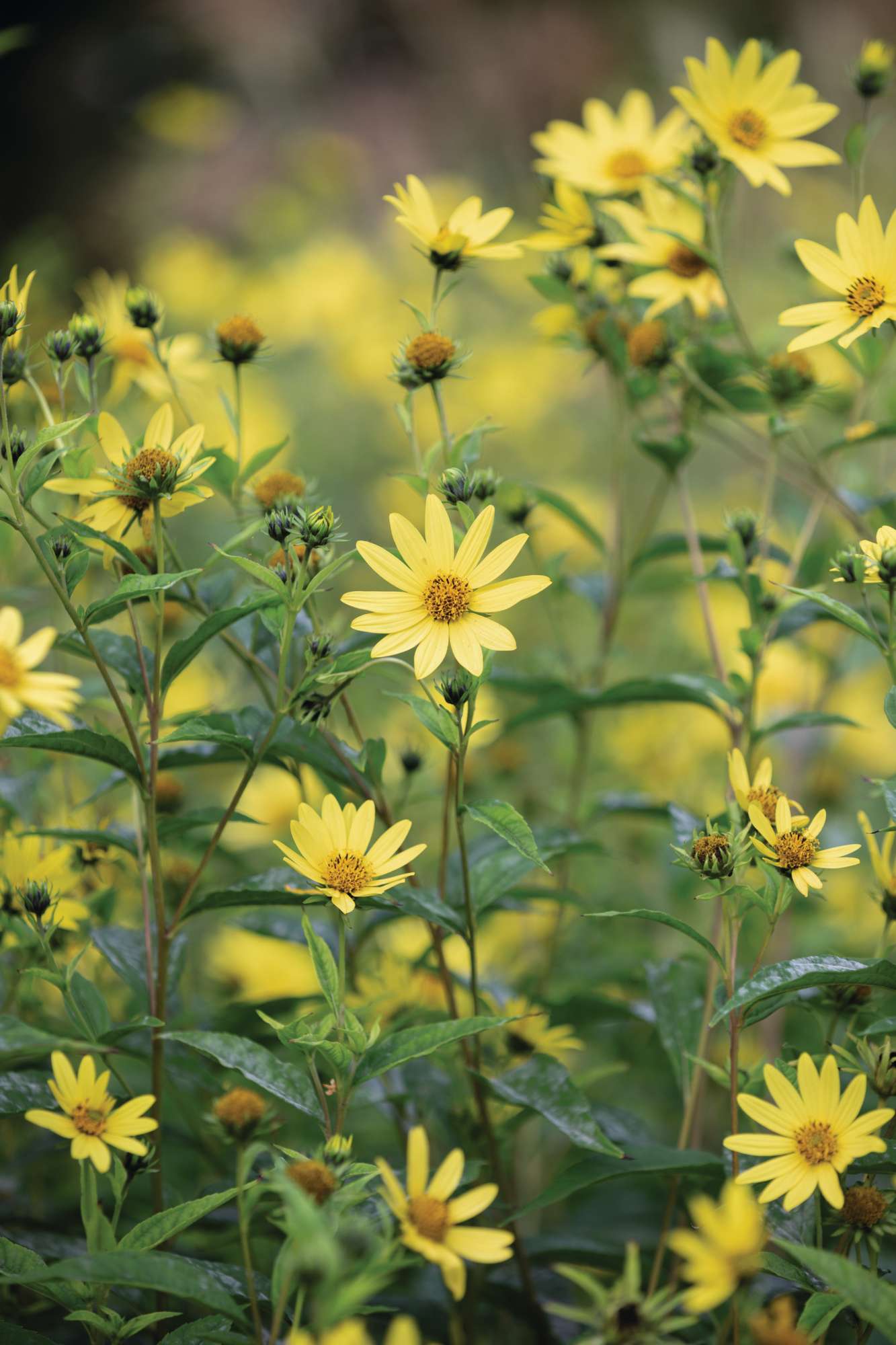
A sturdy, non-invasive cultivar that produces delightful, softly coloured, lemon-yellow sunflowers. Particularly good paired with other statuesque perennials.
1.5-2.5m x 50cm-1m. AGM. RHS H4, USDA 4a-9a.
#15 Potentilla ‘Gibson’s Scarlet’
Semi-scrambling herbaceous plant with intensely coloured, dark-eyed flowers. Grows in the shallowest soils and favours a bright, well-drained site.
30-50cm x 30-50cm. AGM. RHS H7, USDA 5a-9b.
#16 Centaurea montana ‘Purple Heart’

As a boy, I was drawn to the electric colour and funky design of Centaurea montana. ‘Purple Heart’ has distinctive white florets around a rich, velvety centre and doesn’t run amok.
40cm x 60cm. RHS H7, USDA 3a-8b.
#17 Camassia leichtlinii subsp. leichtlinii
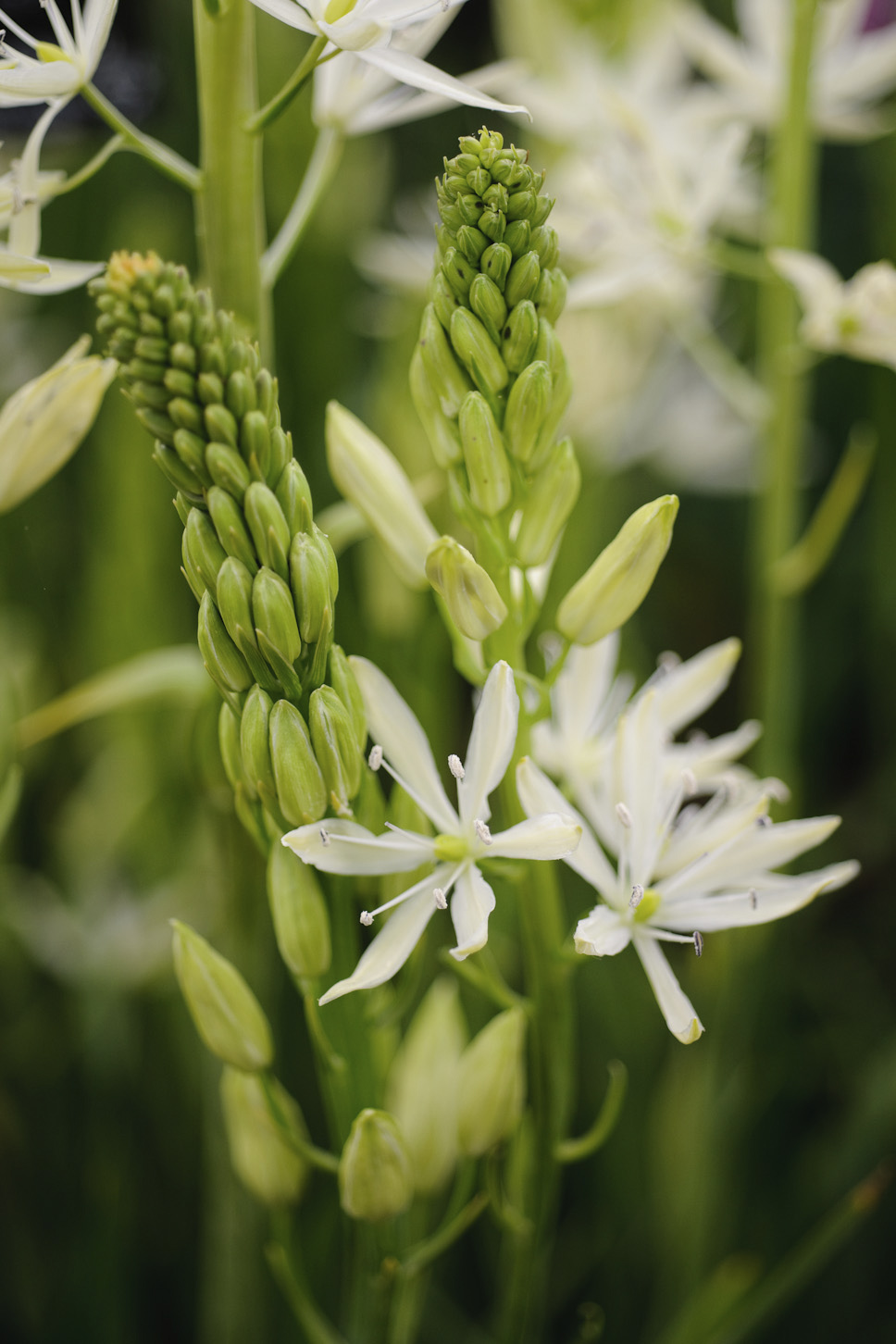
Produces erect racemes of starry, creamy-white flowers (6cm wide) in late spring. Has a longer flowering period than the blue form and will naturalise given the right conditions.
1m x 40-60cm. RHS H4, USDA 5a-9b.
#18 Thalictrum ‘Elin’

In midsummer produces loose, elegant sprays of soft-lavender flowers with contrasting tufts of yellow stamens. Perfect in a woodland garden or moist, sunny border.
#19 Teucrium hircanicum ‘Paradise Delight’

Intense, purple flowers are produced on salvia-like flower heads. Planted close to a gravel surface it will self-seed freely and seedlings transplant easily. Sun to part shade.
30-40cm x 30cm. RHS H7, USDA 8a-10b.
#20 Symphyotrichum novi-belgii ‘Little Pink Beauty’
Single, soft-pink flowers cover a dense clump of mid-green leaves from September to October. As flowers age, lilac becomes more intense.
70cm x 70cm. RHS H7, USDA 4a-8b.