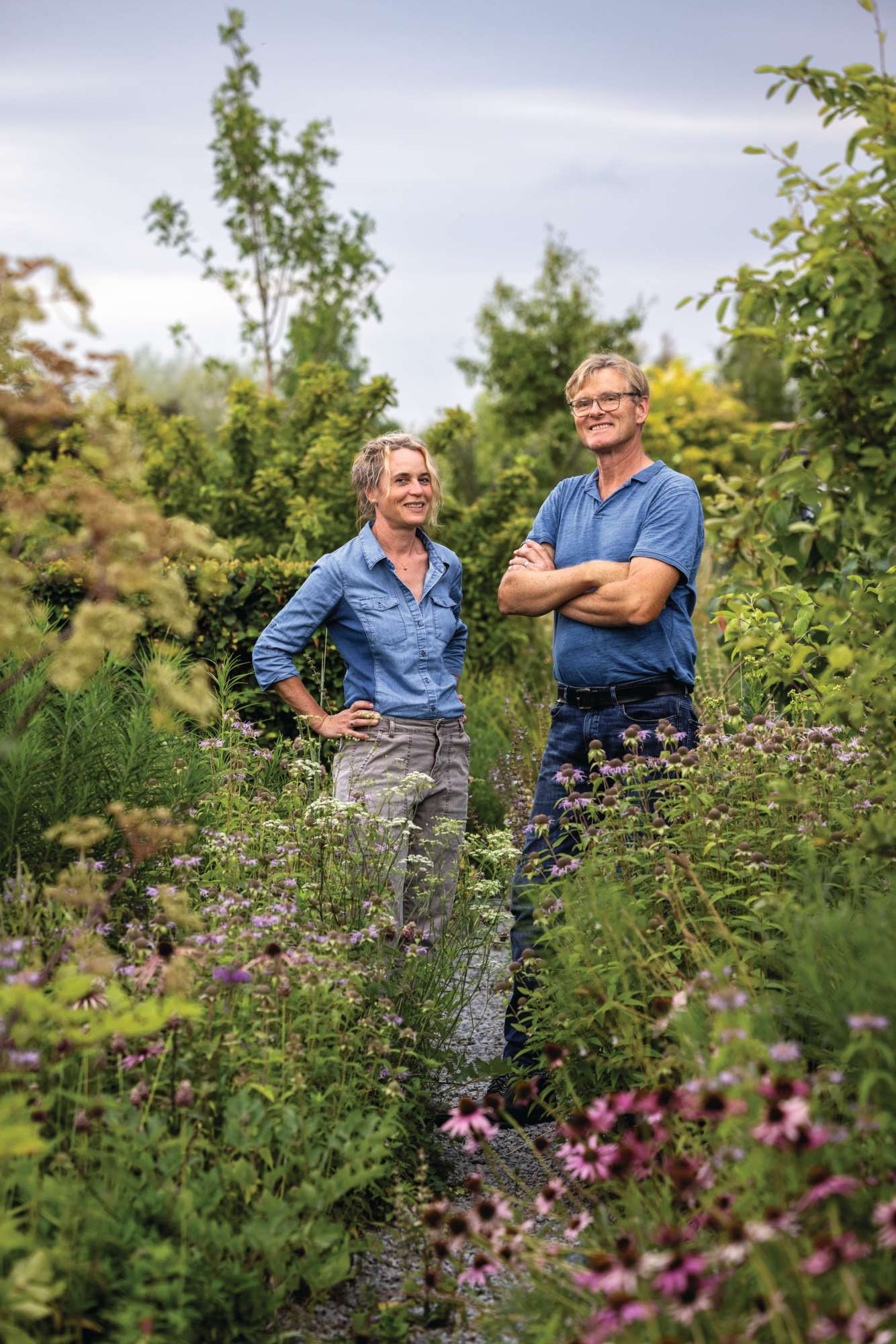
Till Hofmann and Fine Molz met back in 2004, when gardener Fine came to work at Till’s nursery, which he had established four years earlier. At the time, Till was juggling the nursery with his role as head gardener at Hermannshof, the experimental public garden in Weinheim, Germany.
But in 2017, the couple decided it was time to leave, and headed east with a toddler and 90,000 perennials in tow to Rödelsee, a small village near the Bavarian city of Würzburg. There, they have built a remarkable nursery, Die Staudengärtnerei, with stock beds sited between generous areas of naturalistic planting.
You may also like
- 24 key plants from Piet Oudolf's field at Hauser and Wirth art gallery and garden in Somerset
- The nursery that’s changing the face of Australian gardens
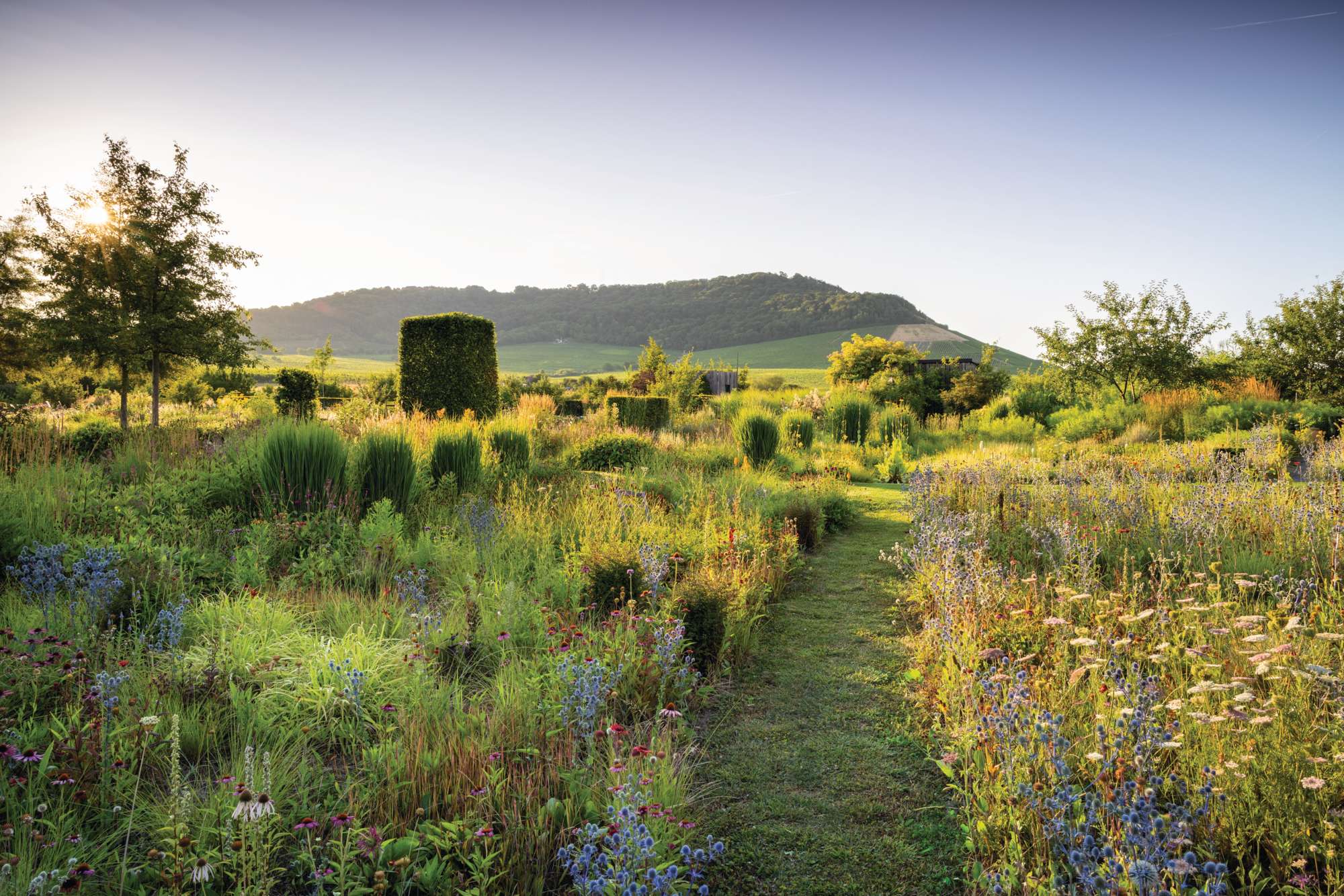
Cassian Schmidt, Hermannshof ’s former director, once described Till as the “perfect match” for evolving Hermannshof’s plantings based on ecological strategies, and that ecological approach is evident in Die Staudengärtnerei’s display gardens. Fine and Till design these together, and although they share an appreciation for naturalism, Till leans more towards the wild, while Fine, who has a degree in landscape architecture, has a greater appreciation of structure. “A wild garden needs a good frame,” she explains. Hedges and clipped hornbeam shapes anchor the loose planting, while a central allée of Alnus glutinosa ‘Imperialis’ creates formal contrast and, together with a group of Populus deltoides ‘Purple Tower’, acts as a natural ‘shade hall’ for this exposed site.
You may also like
- Limited space? You probably still have room for a tree - discover the best trees for small gardens
- A lichen and moss-covered garden in a Finnish pine forest
The nursery’s soil is an unusual and difficult clay. In winter it’s heavy, cold and wet; in summer it dries out in a flash. Its high gypsum-content gives the region’s Silvaner wines their distinct flavour, but doesn’t make life easy for Fine and Till. They mulch and use organic material in the shadier parts of the garden, but in the sunnier areas most plants are established in 20cm of local sand, a technique Till helped pioneer for steppe and dry prairie plantings at Hermannshof. Sun-loving grasses and flowering perennials work well on sand, where the lower nutrient content reduces the competitive pressure of aggressive species and allows for a more complex and stable community. Unlike Sweden’s Peter Korn, who grows in pure sand, Fine and Till feel the 20cm layer is sufficient. “Beneath the sand, the soil remains moist and protected, and soil life thrives,” says Till.
Protecting the soil and retaining moisture is vital in a region where annual rainfall averages just 400mm. The now mature trees and hedges provide some shelter for a site that Till describes as “super windy”, and while a normal year is challenging, the increasingly dry summers and wetter winters are testing the pair’s resolve. Last November the nursery was hit by a particularly hard frost before many plants were properly dormant, which resulted in many losses. It’s an all-too-familiar story as nurseries everywhere try to adapt to a changing climate.
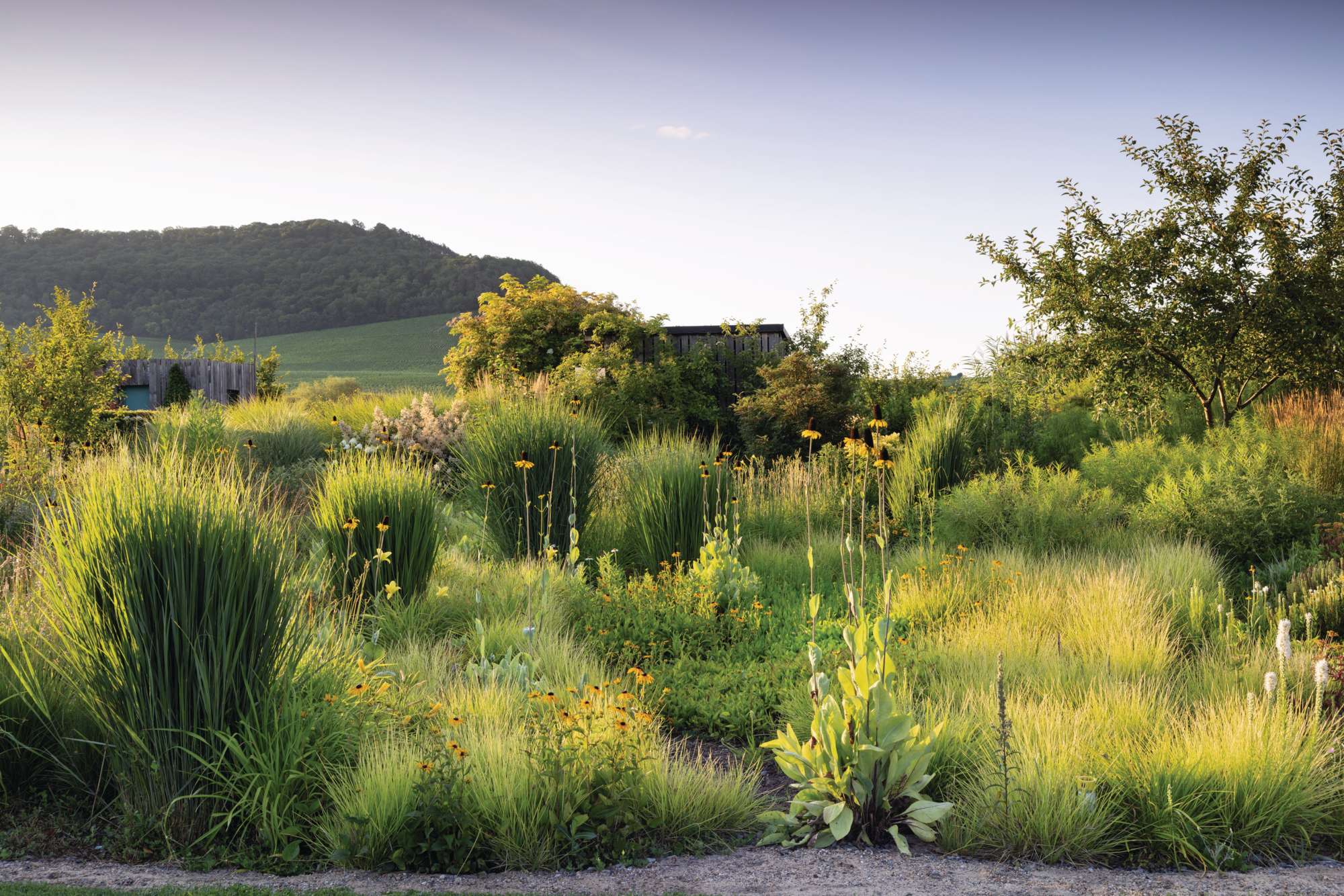
While the sand helps protect the soil beneath, the dry surface, for the most part, creates a hostile environment for weeds. Even so, over the years some of the original plantings have become blurred by volunteer plants, and several choice cultivars lost among the many seedlings. To the east side of the couple’s elegant timber-framed home, a large prairie border includes various echinacea seedlings – “All children of Echinacea purpurea ‘Rubinstern’,” says Fine.
You may also like
- 10 endlessly useful plants chosen by the UK's most exciting gardener
- These 10 adaptable plants can cope with whatever climate change throws at us
Seeing so many plants in Fine and Till’s sensitive plantings provides design inspiration as well as a deeper understanding of the plant’s habit and ecology. The arrangement of the potted plants also informs the visitor, as each area of the nursery is organised into habitat zones with Mediterranean garrigue genera, such as Phlomis and Cistus, separated from the prairie perennials including Silphium and Liatris.
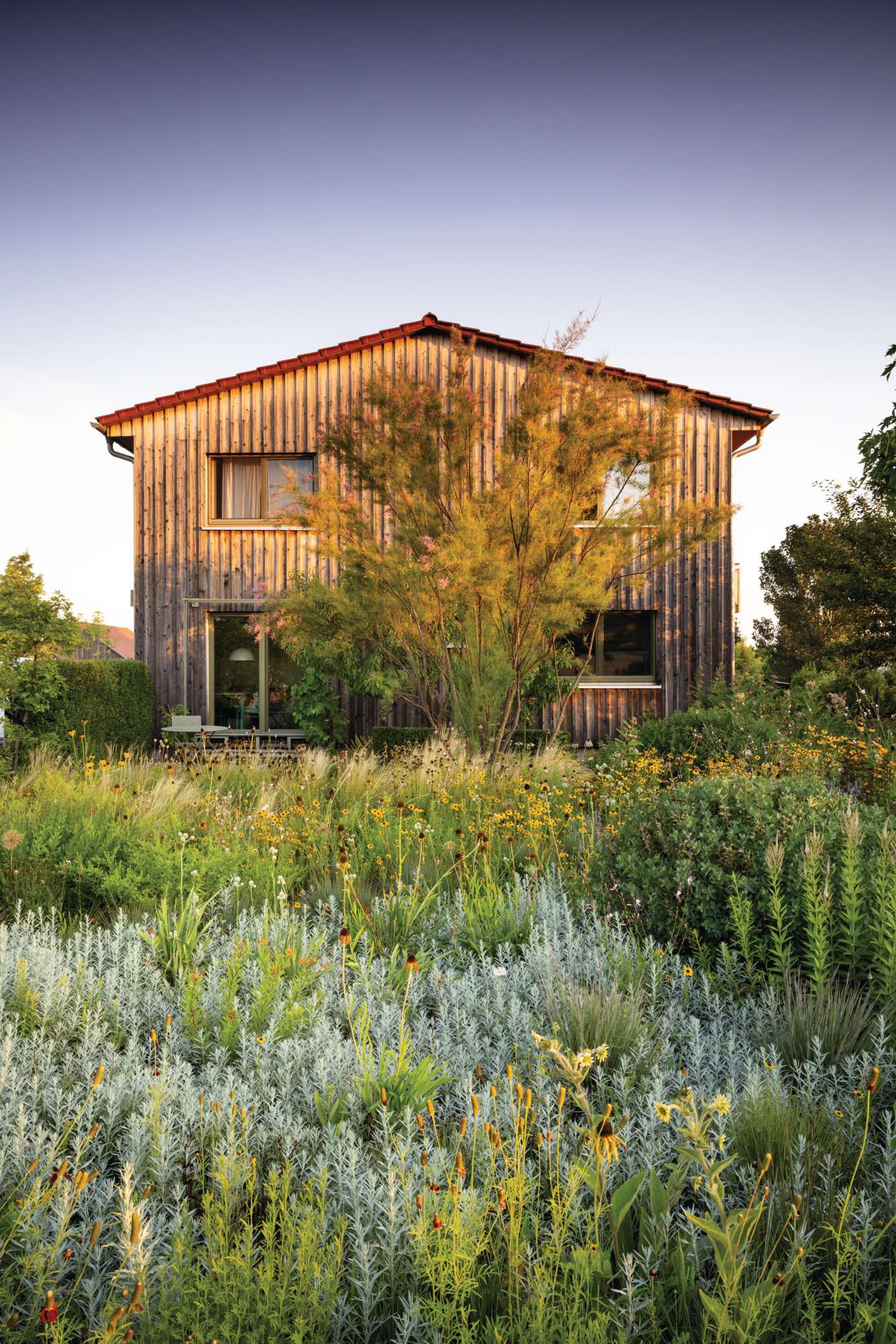
However, while ecology is a priority for both Fine and Till, they primarily made this garden for people to enjoy and to encourage their customers to be more adventurous with their plant selection. Every year they offer around 2,000 different species and cultivars for sale, with around 70 per cent coming from their own production. In stark contrast to an average garden centre, nurseries like this can be a deeply educational experience. It is reassuring that at a time when so many good nurseries seem to be wholesale only, Die Staudengärtnerei is open the public.
In stark contrast to an average garden centre, nurseries like this can be a deeply educational experience.
However, one of the biggest challenges they face, Fine says, is finding people who really want to work with plants. “Everyone wants to design, but running a nursery is a life project.” Nonetheless, Die Staudengärtnerei continues to thrive and demonstrate just how beautiful, and achievable, ecological planting design can be.
USEFUL INFORMATION
Address Die Staudengärtnerei, Alte Iphöfer Straße 27, 97348 Rödelsee, Germany.
Tel +49 (0)9323 8752230.
Web die-staudengaertnerei.de
Open Wednesday – Friday, 1.30-6pm; Saturday, 9.30am-4pm.