The UK is a nation of avid gardeners, and yet the average garden size in the UK is a mere 225 square metres. Urban gardens are often much smaller – less than two-thirds of this. But while space may be limited, your imagination doesn’t have to be.
Take inspiration from the clever solutions and smart approaches used by garden designers in these 17 standout small spaces to make the most of your own garden and turn it into a mini haven.
Don't be afraid to go big
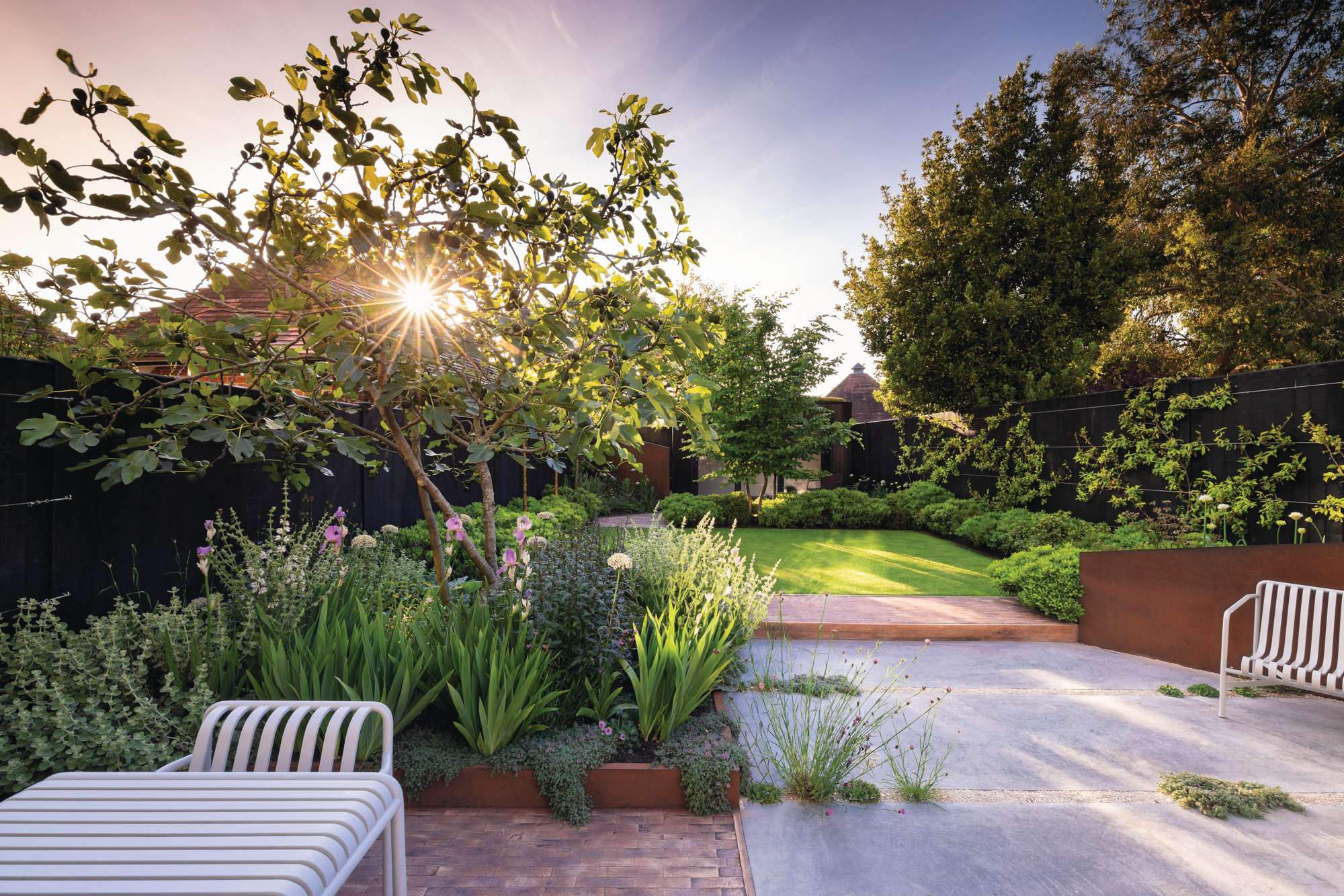
Measuring just 20m x 7.5m, this Whitstable garden by design studio Farlam and Chandler had to fulfil a demanding brief: a usable garden, with space to play and entertain, but stylish and low maintenance. By being unafraid to make the main elements large, relative to the available space, designer Harriet Farlam created an air of calm in the garden.
“It’s a common mistake to think that small features will look better in a small garden, when in fact the opposite is usually true,” she says. The garden is anchored by elements such as rich black fencing and the large paving slab terrace, which has crushed shell in the joints, studded with thyme and saxifrage. These details call out not just elements of the newly refurbished house, but the coastline beyond. “Although the garden is quite modern in design, we did want to honour its seaside setting, so all the materials we have used in its construction can be found in the local area,” says Harriet.
You may also like
Limit your palette
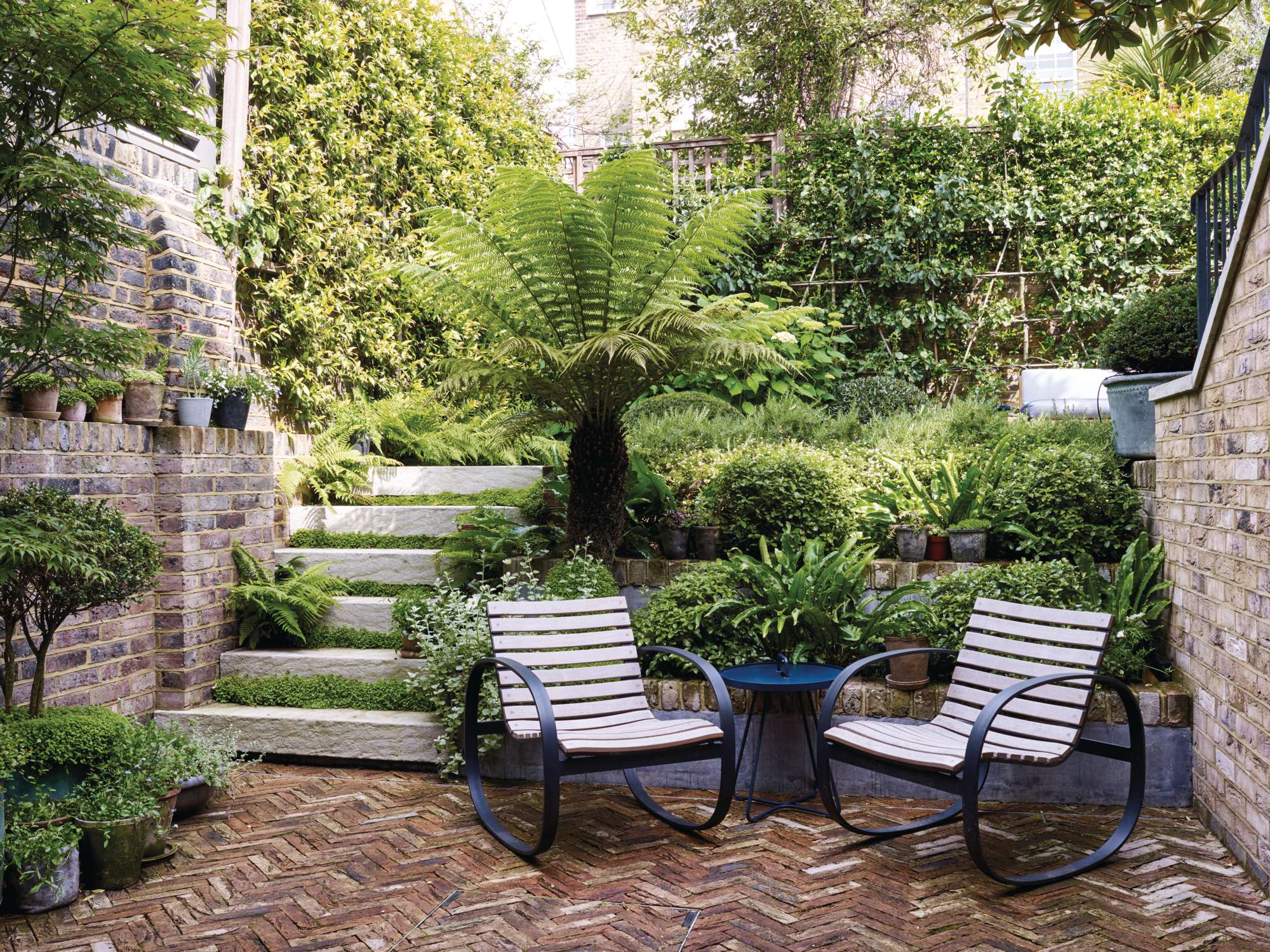
For this project just off High Street Kensington in London, designer Alasdair Cameron created cohesion by using a limited palette of materials, starting with clay bricks laid in a herringbone pattern to echo the wooden floor inside. The limestone steps that lead up to the main garden area beyond also match the surrounds for the extension’s glass doors. “In such a small space, I like to keep things simple, otherwise it gets too busy and makes the space look smaller,” he says.
Designer Carolien Barkman reinforces this advice, recommending that you use the same materials across the garden but in different ways. “Repeating materials throughout a garden creates cohesion, while using them in different ways increases interest,” she explains.
Create immersion through zoning
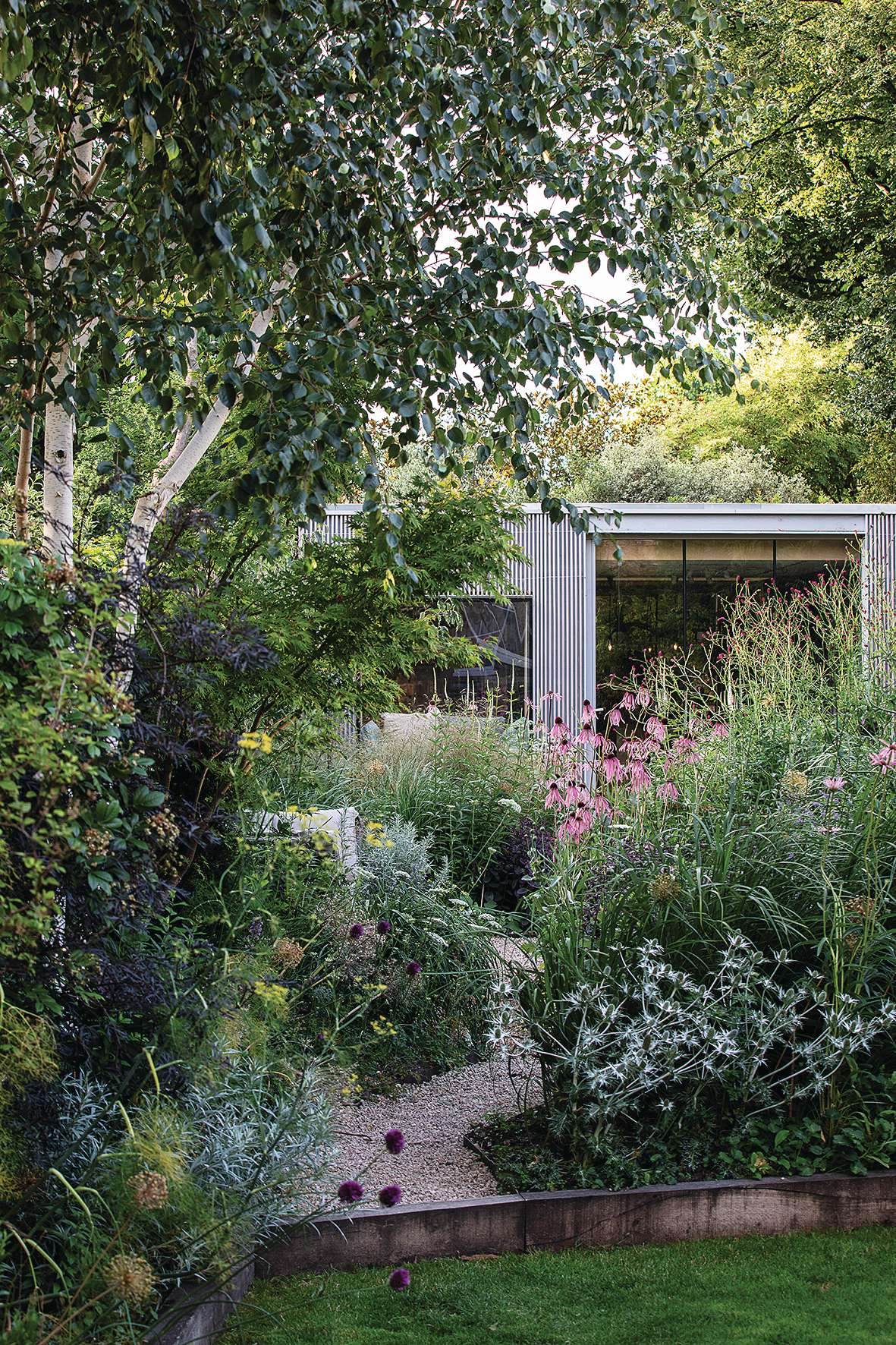
This family garden in south London by designer Jack Wallington is cleverly zoned to appeal to both young and grown-up residents, with two modest but lush lawns that bookend a central planting zone made up of three ‘mini meadows’.
“I grew up in the country and remember how much my siblings and I loved running through the fields, so I wanted to give the boys something to chase around. As the main planted area in the garden, I treated it as a work of art too,” Jack explains.
Self-seeders, wildflowers and even weeds intermingle with landscaping and irregular shapes means the space can’t all be seen in one go, “which I think makes the experience better and more fulfilling,” says Jack.
Layer planting horizontally
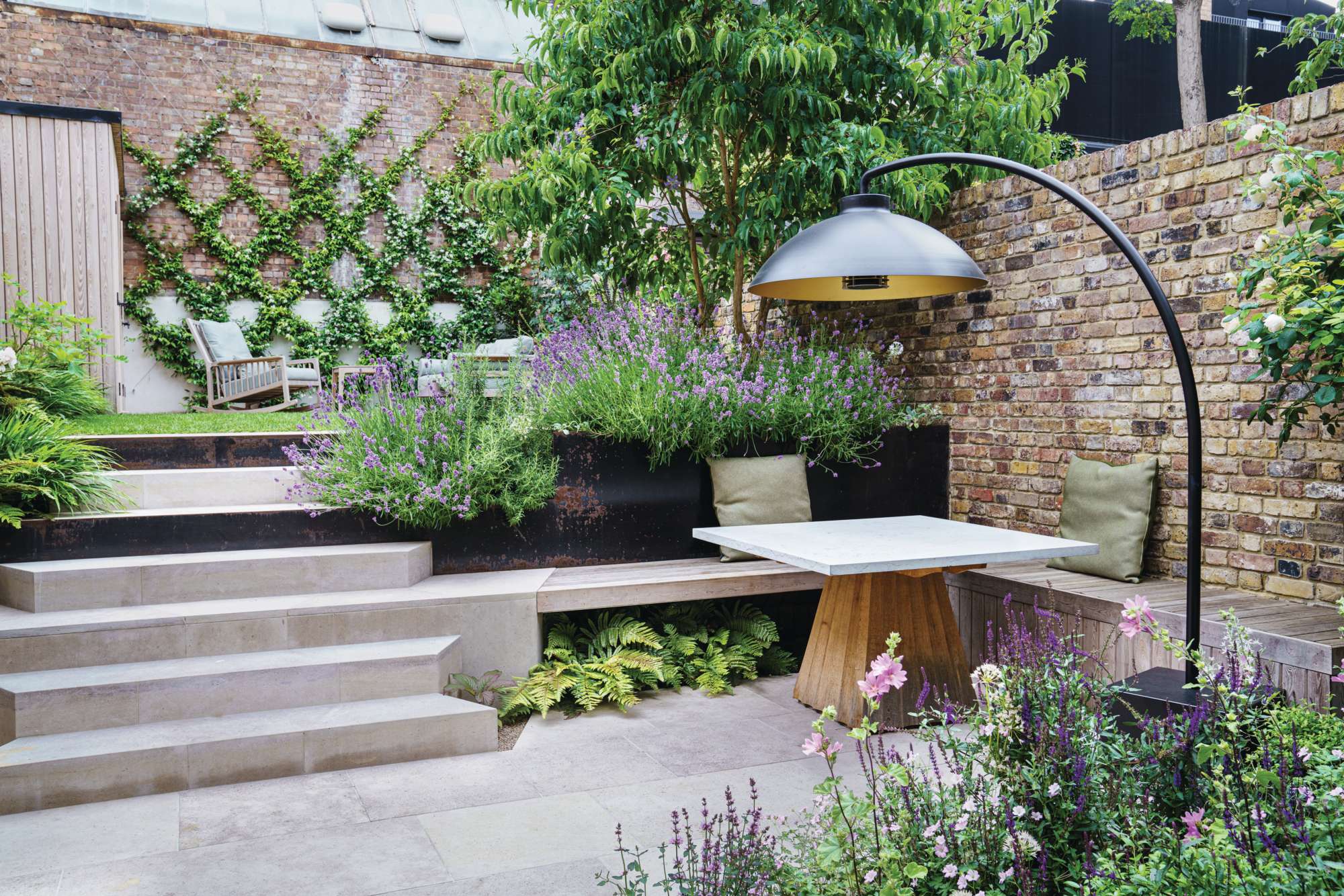
With space at a premium, the rear garden of this Grade II-listed villa in the city measures a scant 12.5m x 6m, yet designer Ben Chandler of Farlam and Chandler managed to squeeze in multiple areas for the whole family to enjoy. A slope added to the challenge, but this ended up working to Ben’s advantage, allowing him to use both vertical and horizontal space to add extra appeal.
“We created a layered planting scheme that immerses you in greenery as you look out from the extension,” he says. “The generous proportions and wide steps help to create the illusion of space, and by training scented climbing roses and jasmine on to the vertical surfaces, we’ve packed lots of flowers into a small area, without blocking out too much sunlight.
Embrace texture in shade
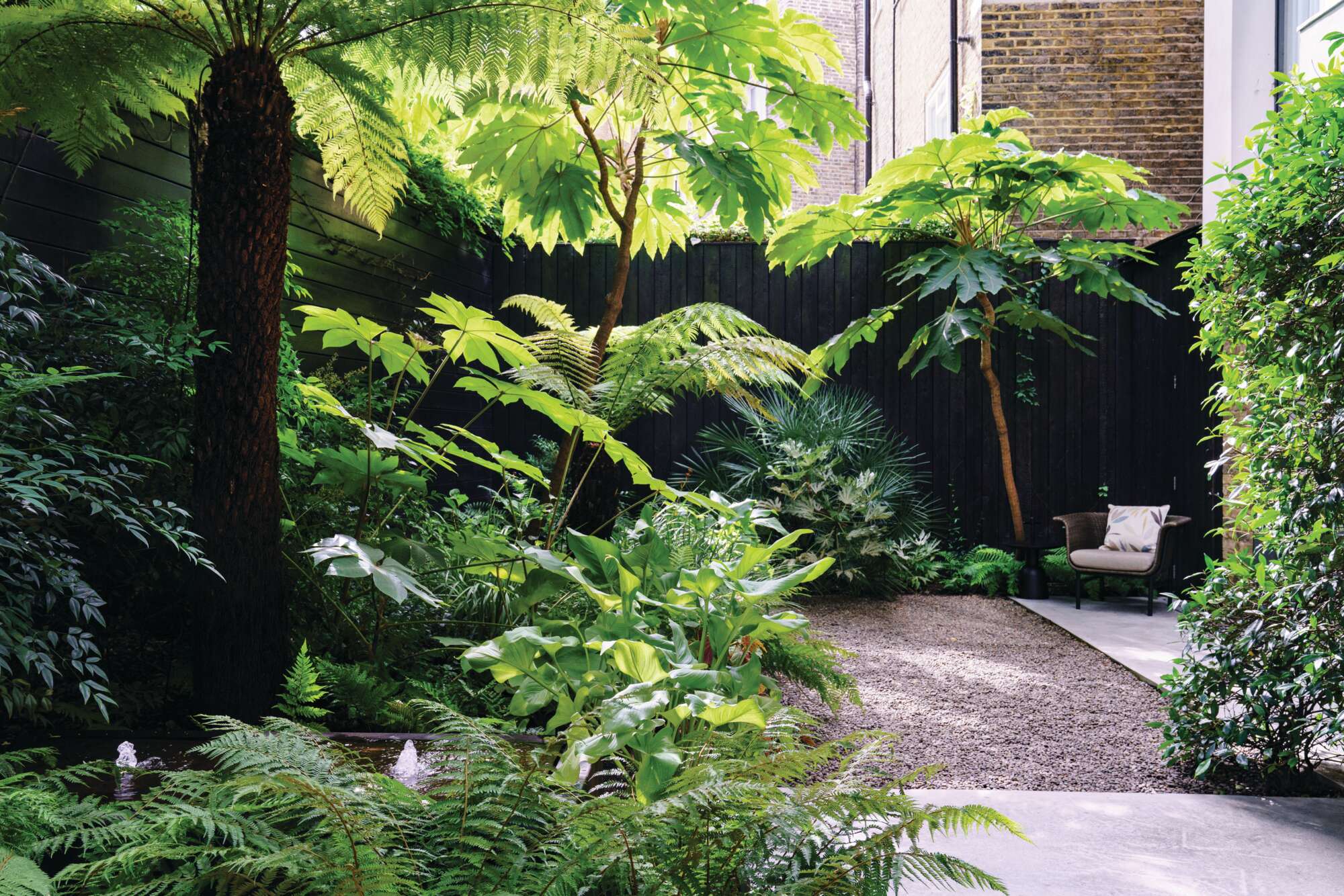
A small garden is enough of a challenge, but working with one that is almost completely submerged in shade can be even more difficult. However, there are still ways to make a dramatic statement and make a space that entices you in with the promise of mystery and privacy.
That’s exactly what designer Declan Buckley achieved with this urban garden, surrounded on all sides and lacking much natural light. “In a shady garden, you can’t have many flowers, so it’s more about texture and shape,” Declan explains. Large-leaved Tetrapanax papyrifer ‘Rex’, tree ferns (Dicksonia antarctica) and Fatsia japonica ‘Tsumugi-shibori’ bring height to the space and invite visitors to relax in the different seating and dining areas.
You may also like
- How to care for ferns and the best for the garden
- Are you a pteridomaniac? Here's why ferns are fascinating
Experiment in miniature
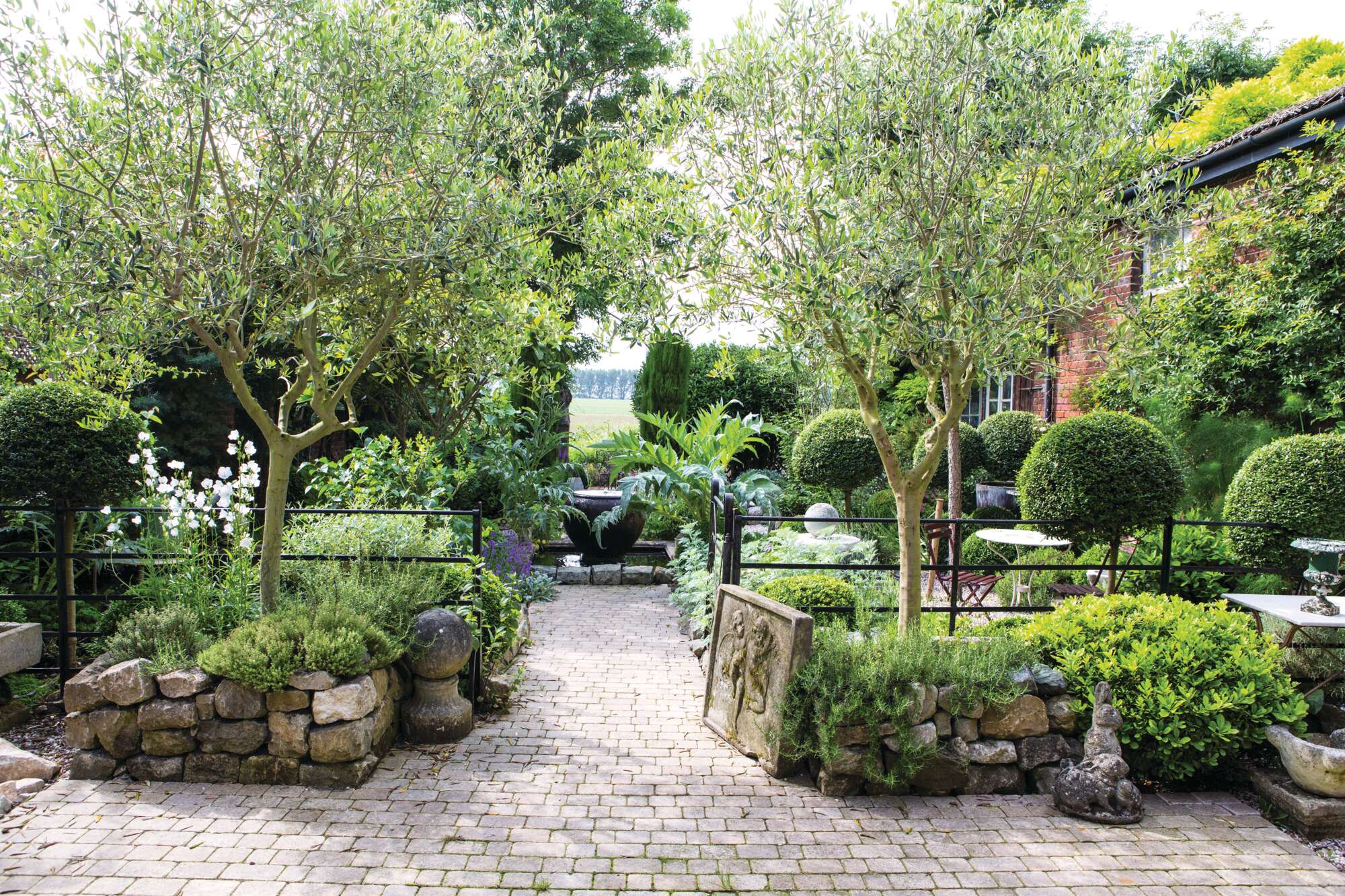
Many gardeners will visit the beautiful gardens of the Mediterranean and lament the inability to reproduce the look back home. But the advantage of a small plot is that it can offer a place to experiment with ideas and styles that would probably not work on the scale of a large country garden.
Provençal native and antiques dealer Sophie de Bouvier de Cachard has done just this in her Kent courtyard garden, introducing classics from the South of France including Pinus pinea, Cupressus sempervirens, and fig and olive trees underplanted with rosemary and thyme. “It’s a tableau of clipped balls, cones and evergreen pillars in greens and greys, interspersed with simple statuary in local stone, which mimics maquis shrubland with style and elegance,” says Sophie.
You may also like
- 10 inspiring small-space gardens, beautifully designed
- Discover a bijou garden in Amsterdam, perfect for entertaining
Work with the site
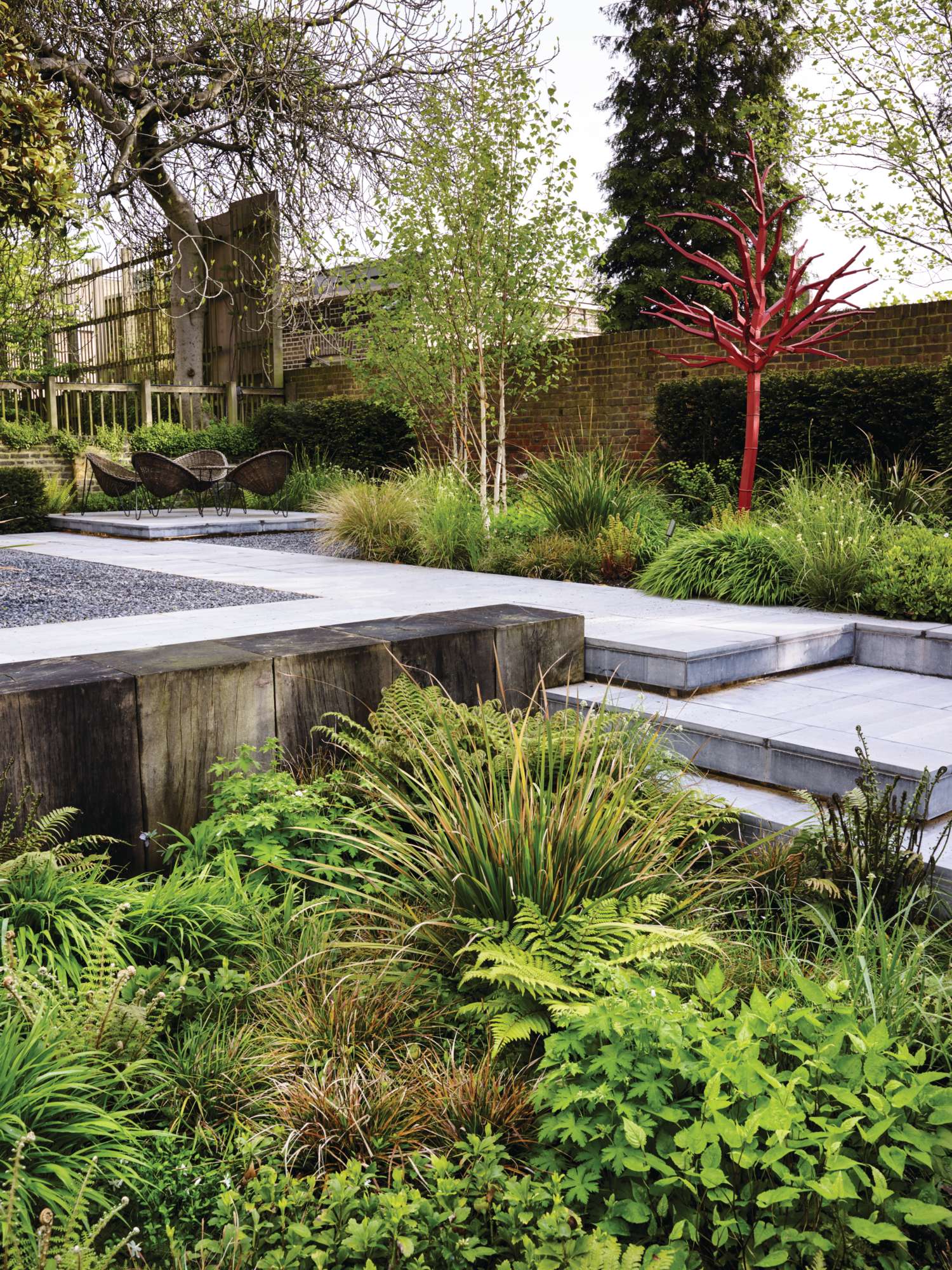
There were restrictions to consider before designer Chris Moss could even pick up a pencil to design this urban garden. More than 70 per cent of the brick-walled plot has a maximum planting depth of 40cm that rather ruled out large specimen trees. East facing, it is in the shade of the tall house from midday onwards; three of the existing trees had preservation orders and had to be retained; and there was a 3m-wide lightwell separating the house from the garden.
Chris devised a scheme strong in geometric lines, with crisply laid Belgian blue limestone paving and sculptural elements, but with a richly textured, calm planting palette, predominantly in shades of green that suggests a woodland edge. Extra year-round interest is created with sculptures and outdoor artworks.
Pack it with planting
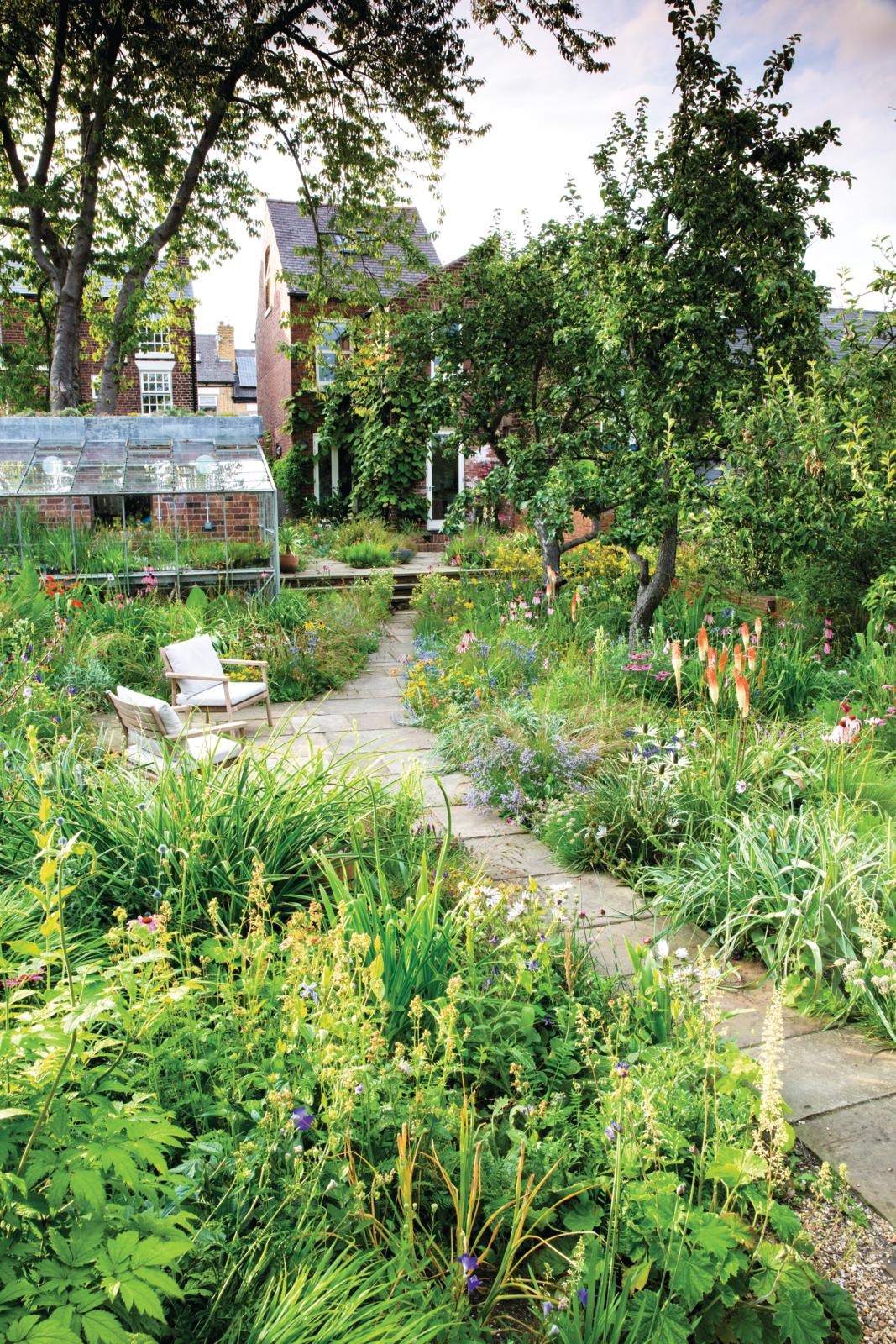
James Hitchmough’s former Sheffield garden was bursting at the seams with planting, leaving just enough space in the middle for a seating area. It’s an approach that is still relatively novel for most small garden owners, so for those not willing to go full floral just yet, many designers advise extending borders and putting in more planting than you would first think.
Tabitha Rigden uses swathes of planting to divide areas, frame views and draw the eye with layers of texture and height. “Don’t skimp on planting,” she advises. “It’s the planting that turns a space into a garden.” And don’t squeeze it all up against a boundary. “Too often, borders are pushed to the edges of a garden, but in a small space, central planting can be transformative.”
Create a journey
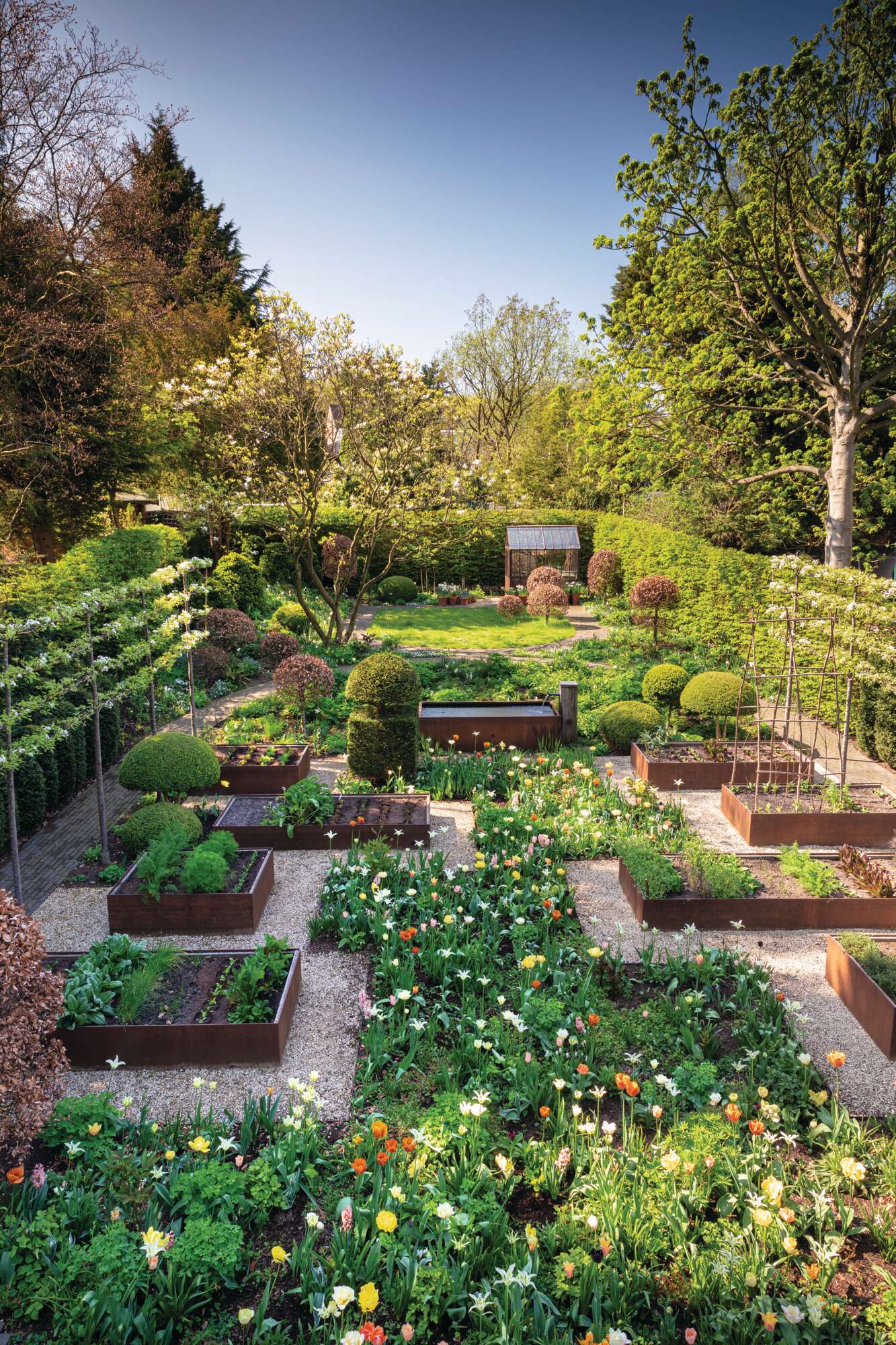
This suburban kitchen garden designed by Arne Maynard has something for everyone, like a grand country house garden in miniature. Although the garden is only 33m long, Arne created several distinct areas, including an informal meadow at the far end.
An asymmetric arrangement of Corten-steel raised beds surrounds central beds of ornamental planting, and creates winding routes through the garden, lengthening the journey and making the space seem larger than it is. Rows of formally trained, pleached ‘Doyenné du Comice’ pear trees add some vertical structure and much-needed privacy, while also adding a sense of enclosure – like a mini walled kitchen garden.
Lead with lushness
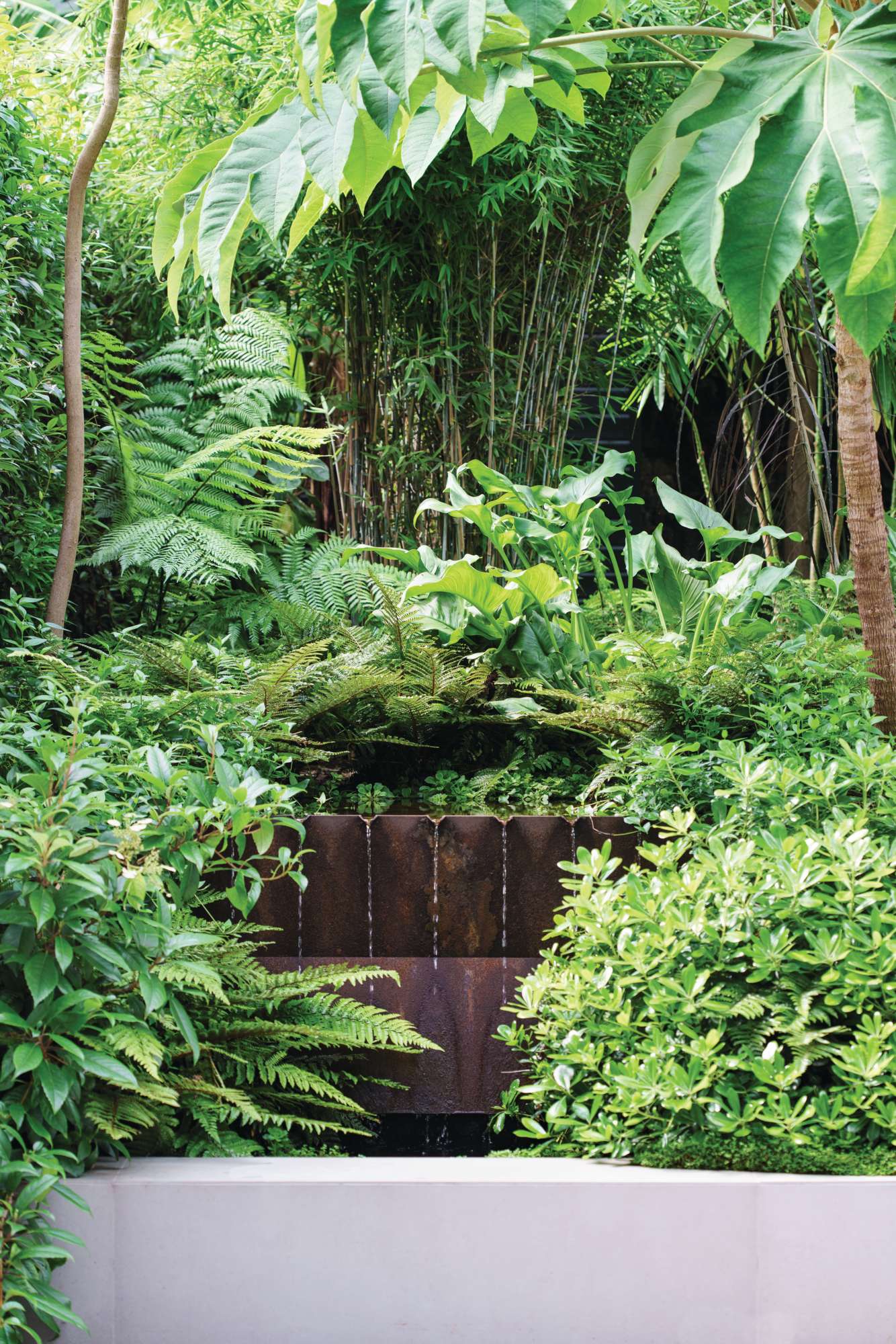
In the UK’s temperate climate, it’s surprising to discover how easy it is to create an exotic jungle effect - even more so that it can be a realistic ambition in a small, urban back garden.
This is just what designer Declan Buckley was aiming for when he created a small but luscious tropical garden with shades of their Keralan childhoods for his clients. It is based on his personal tropical paradise at his own garden just across the road.
You may also like
- A chic, contemporary coastal designer garden from Declan Buckley
- Memories of Kerala in a London garden
“My garden is like the temperate house at Kew, but without a roof,” he says. “It’s rather overgrown now but they loved the lushness of it.”
Declan advises to go for a single idea and really run with it, and here he layered mostly evergreen planting from ground to canopy, including Zantedeschia aethiopica, Phyllostachys bissetii and Tetrapanax papyrifer ‘Rex’, around a steel water feature. “Also, the sound of water immediately creates a sense of place in a small garden.”
Add punch with pots
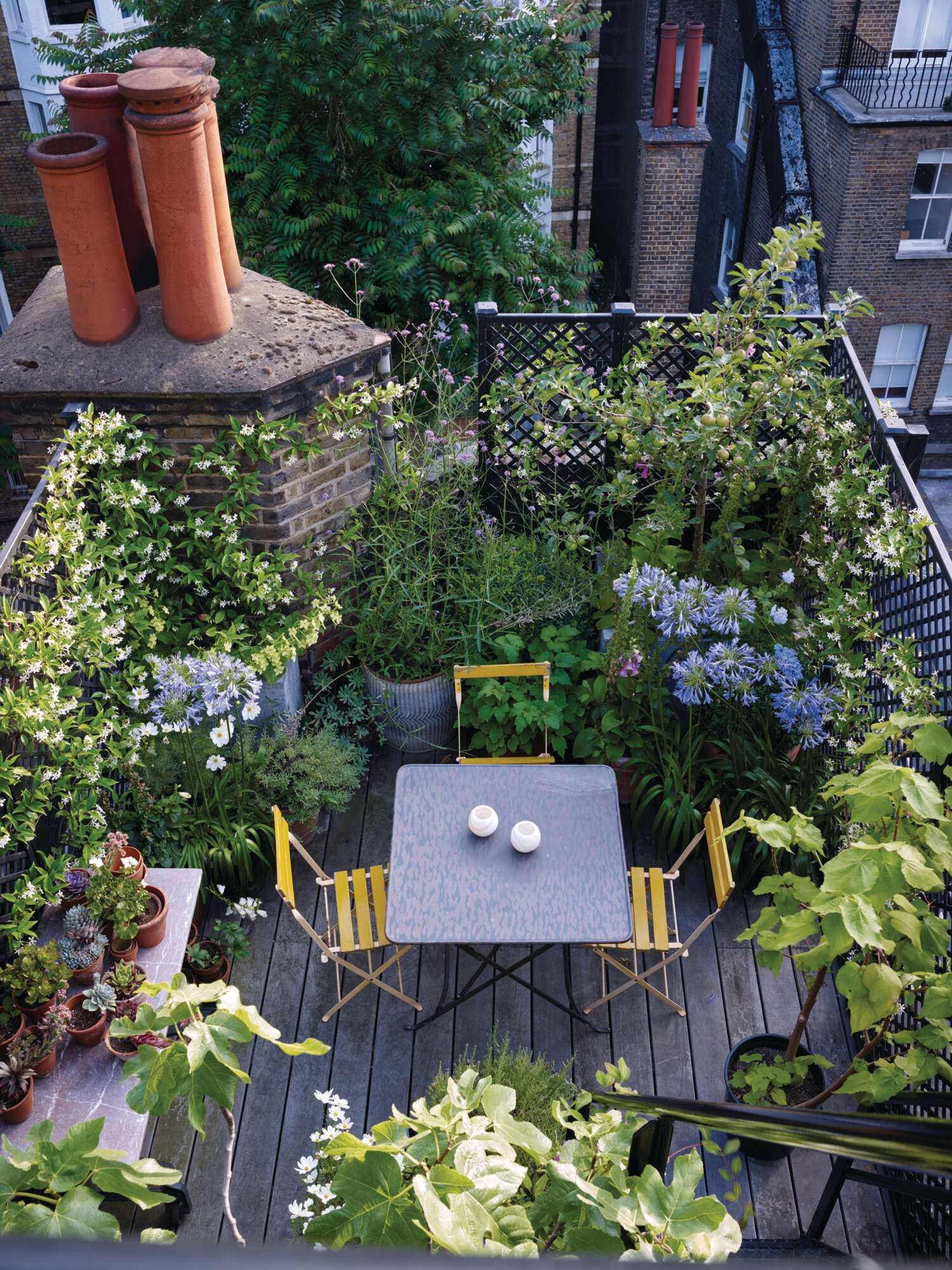
It may be up four floors of townhouse and then a further flight to get outside, but this tiny terrace in Bloomsbury packs a powerful floral punch. The former city residence of gardener Charlie McCormick and interior designer Ben Pentreath, it had a roof garden featuring pots and containers gathered from antique markets. The eclectic selection of plants that turns this tiny space into an urban sanctuary includes some self-seeders and pot stalwarts including Verbena bonariensis, agapanthus and sweet peas. There is also a “scrumptious” apple tree that produces “good eaters” growing quite happily in a container, even on a semi-vigorous MM106 rootstock.
You may also like
Appeal to the senses
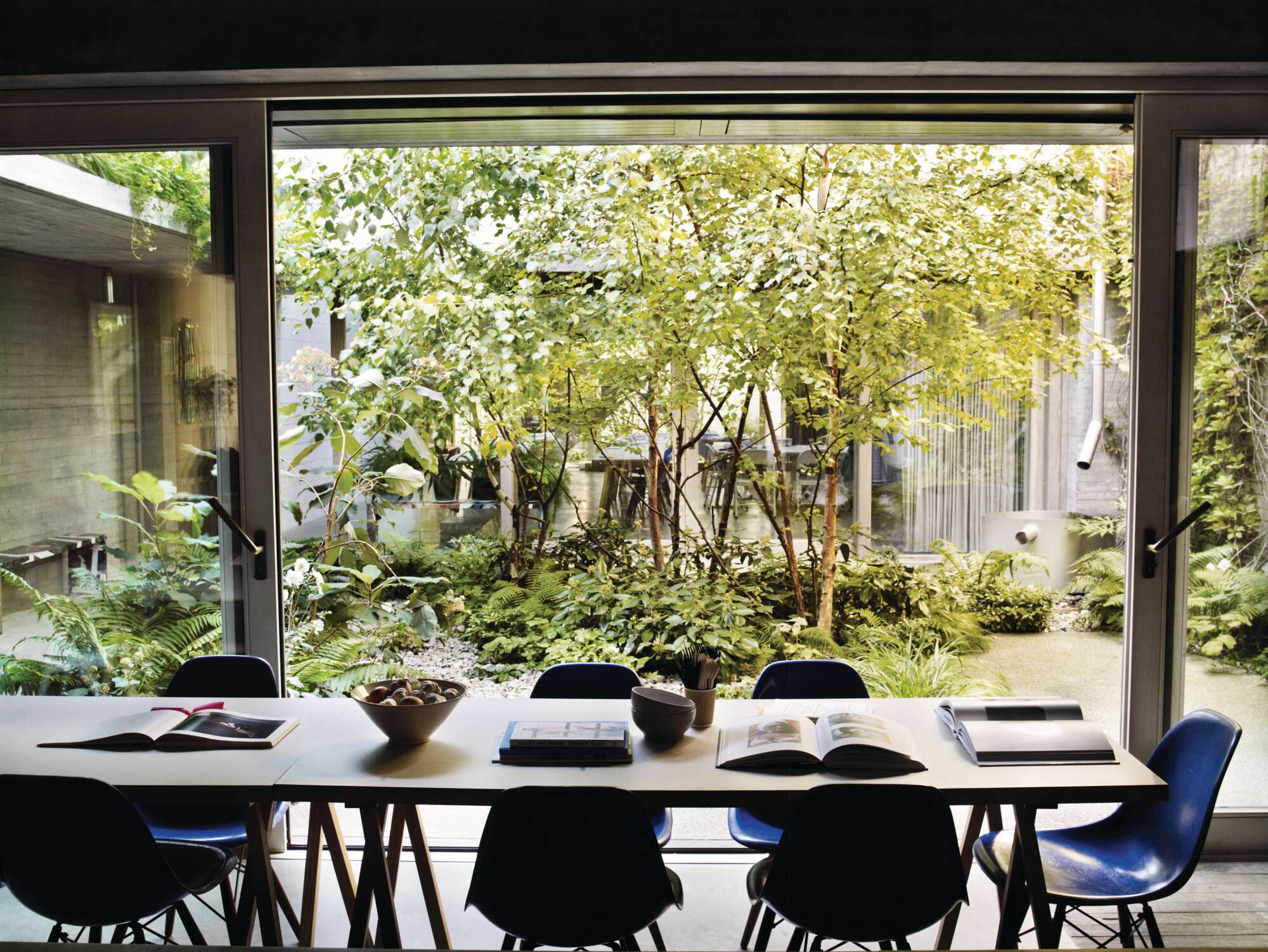
Surrounded on all sides by Brutalist architecture, this enclosed courtyard is one of three at the London studio of German photographer Juergen Teller. The courtyards act as living screens, so you’re not quite aware of what lies beyond, enticing you to explore.
Designer Dan Pearson reused broken concrete saved from building works both as paving and as a mulch between the plants, and chose a plant palette that develops through the seasons. “We thought a lot about creating a design that would reflect light from the foliage.” He also focused on creating sensory experiences. “In China I was introduced to the idea of rain-patter gardens. You can open the glass door and allow the sound of rain on the leaves to flood the room.
You may also like
Work with water
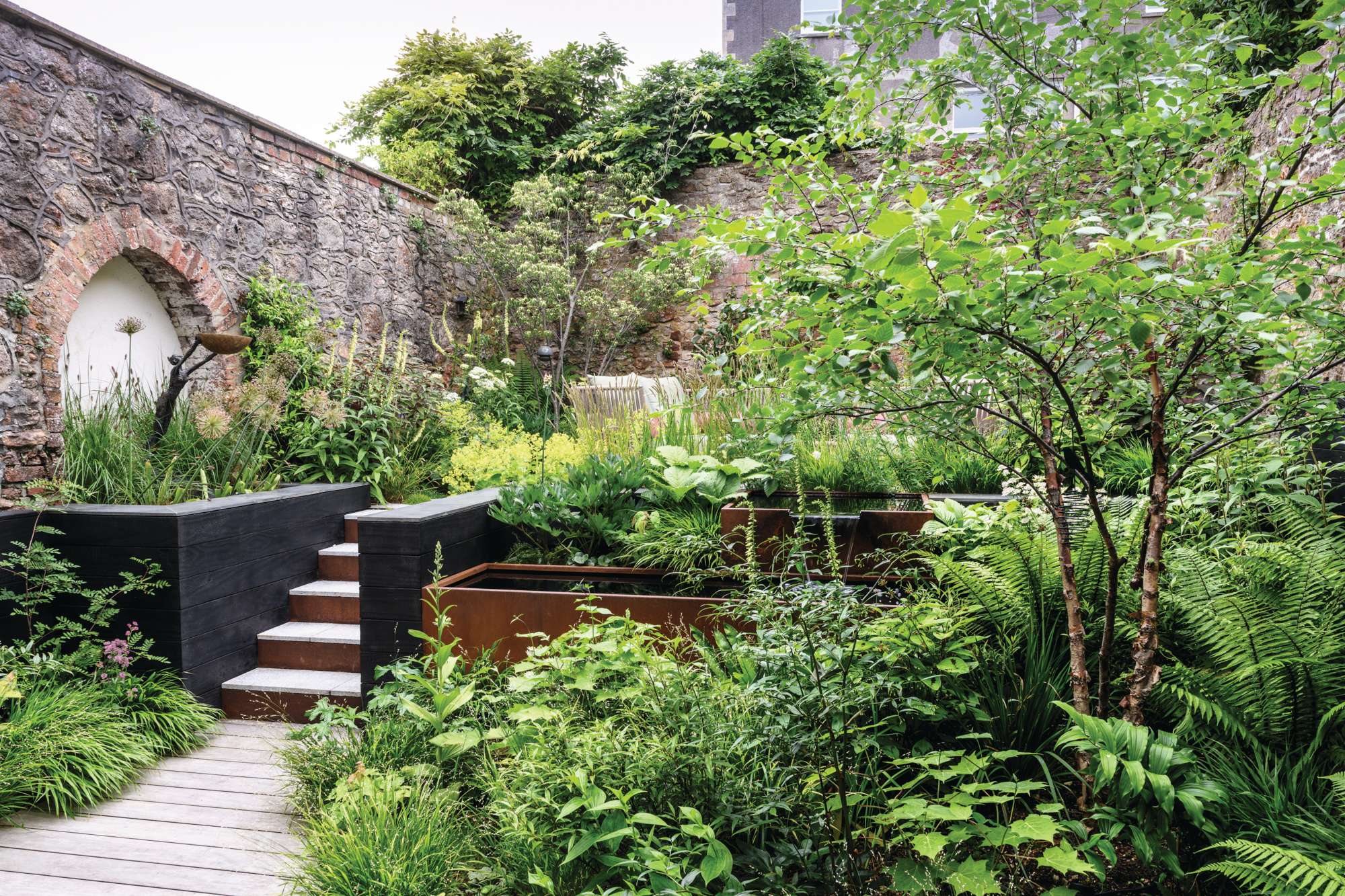
Resist the temptation to go small when considering water. In this Bristol courtyard garden, water is a constant fact of life, not just thanks to the local climate but also the Corten-steel tanks that create a focal point on the lower level and become the centrepiece of the whole design.
The sound of water can bring instant calm and block out city noise, but don’t be too ambitious. “Water should add ambience, not create a deafening roar,” says designer Jamie Innes. Bringing the water feature into harmony with the overarching green palette, the tanks are surrounded by foliage plants that include Tricyrtis formosana, Kirengeshoma palmata, Digitalis lutea, Dryopteris wallichiana, and grasses Hakonechloa macra and Melica altissima ‘Alba’.
Make spaces more intimate
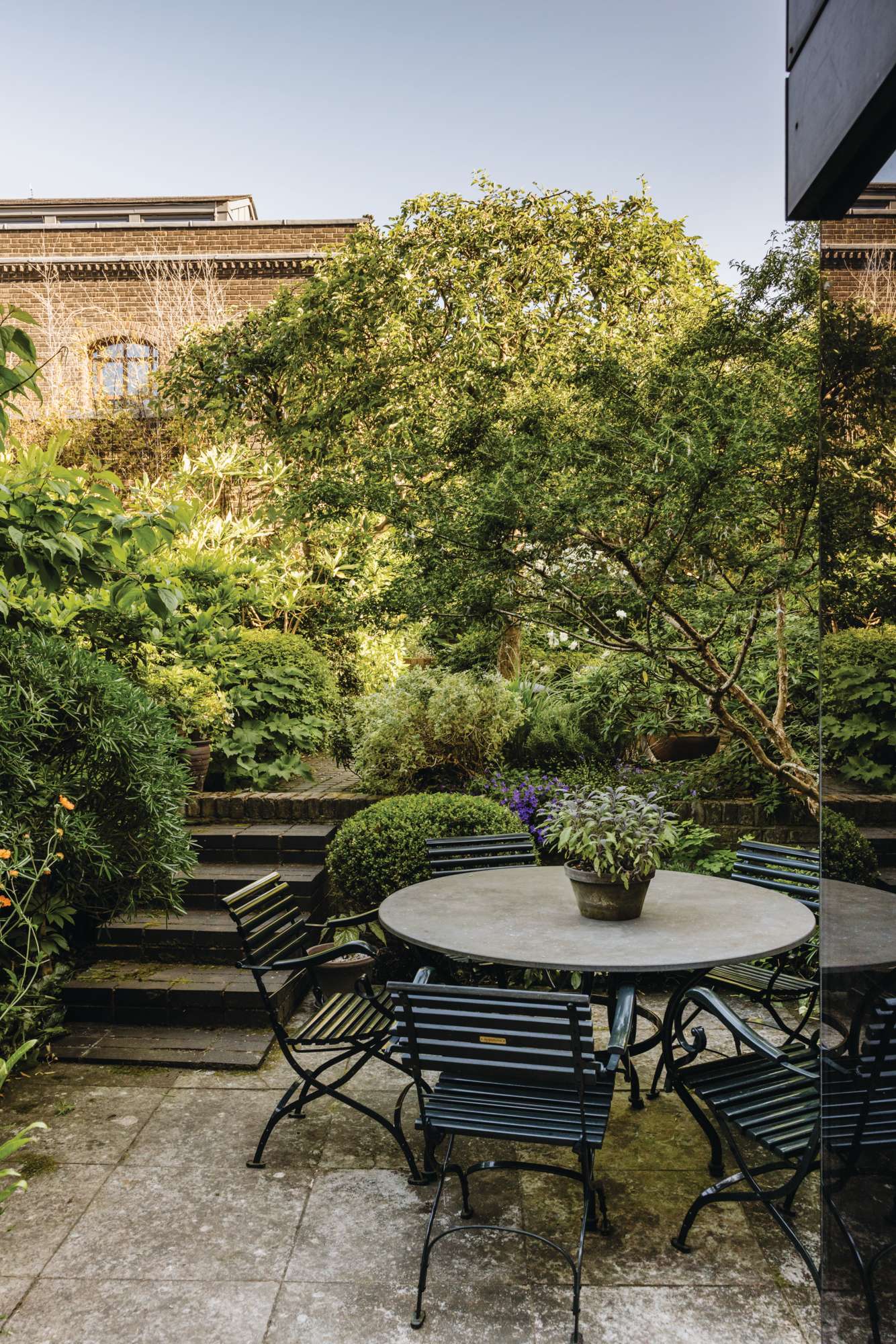
This enveloping urban back garden is designer Emily Erlam’s own plot and is set on several different levels. Emily used the changes in level to create diverse spaces in which to linger and sit, and this creates the flow through the space, with points of interest all the way down to the bottom of the garden.
Outside the lower ground floor of the house is an outdoor dining area with a circular table. The second level leads to a shady seating area beneath a Malus ‘Evereste’; a place for quiet. The final level feels tucked away, surrounded by tall walls and screened by a large branching fig tree. It ends in a firepit seating area where the whole family likes to gather to spend time together enjoying each other’s company.
You may also like
Add at least one tree
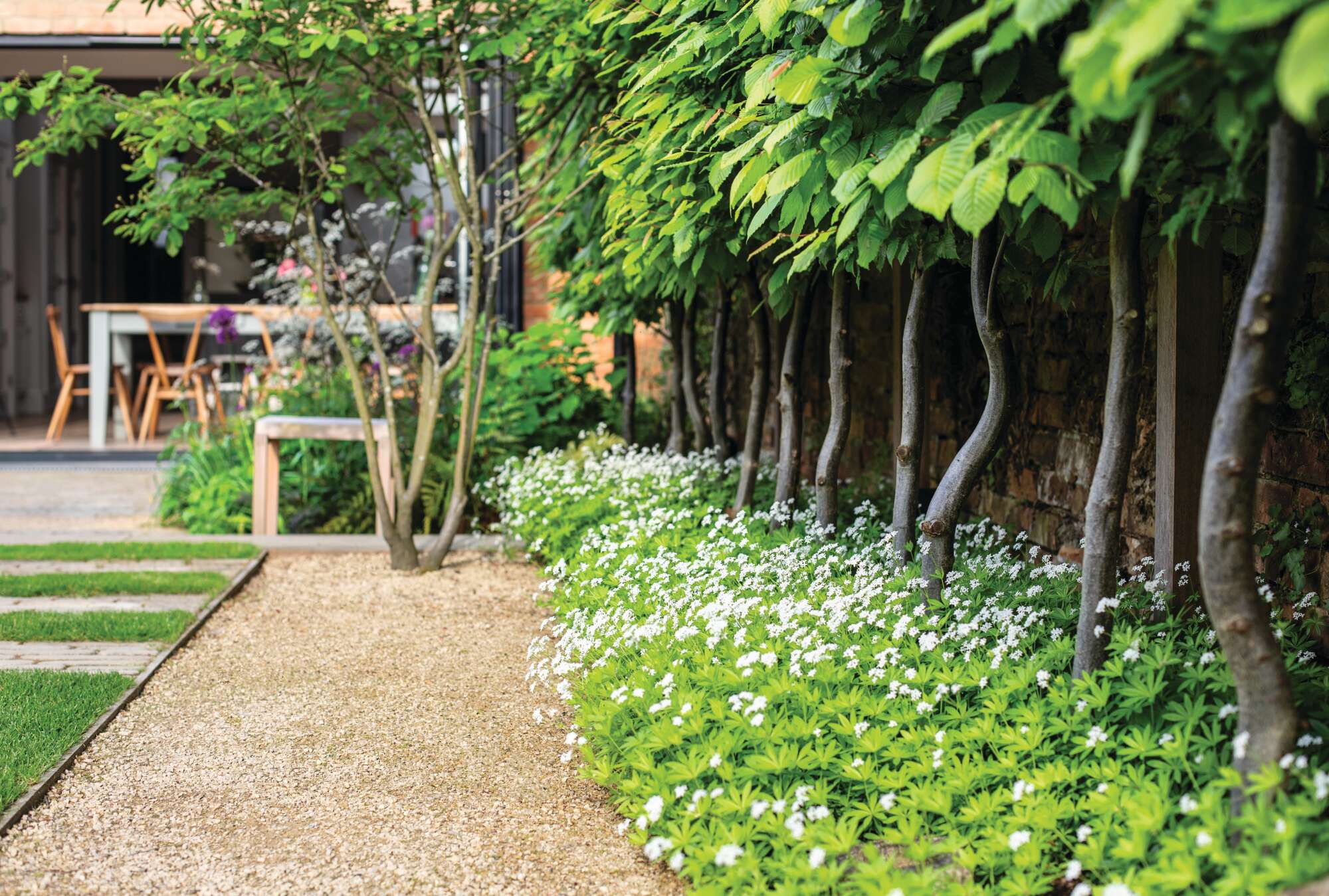
With visions of giant leylandii swallowing up sky and space, when it comes to large woody plants like trees and shrubs, small garden owners are naturally nervous. But in fact a tree – or trees, plural – can transform small spaces and still afford full use of the surrounding area.
In this small Oxford garden for a novelist by designer Angus Thompson, he used a pleached hornbeam hedge along the boundary and a multi-stem Amelanchier x lamarckii in the pathway that runs from the house to her writing studio. This provides both a visual and physical full stop, avoiding that runway feel and allowing for a more varied journey from one area to the next.
Sweet woodruff, Galium odoratum, with its white flowers is used as underplanting in the shade of the pleached hornbeam.
You may also like
Don't try to do everything
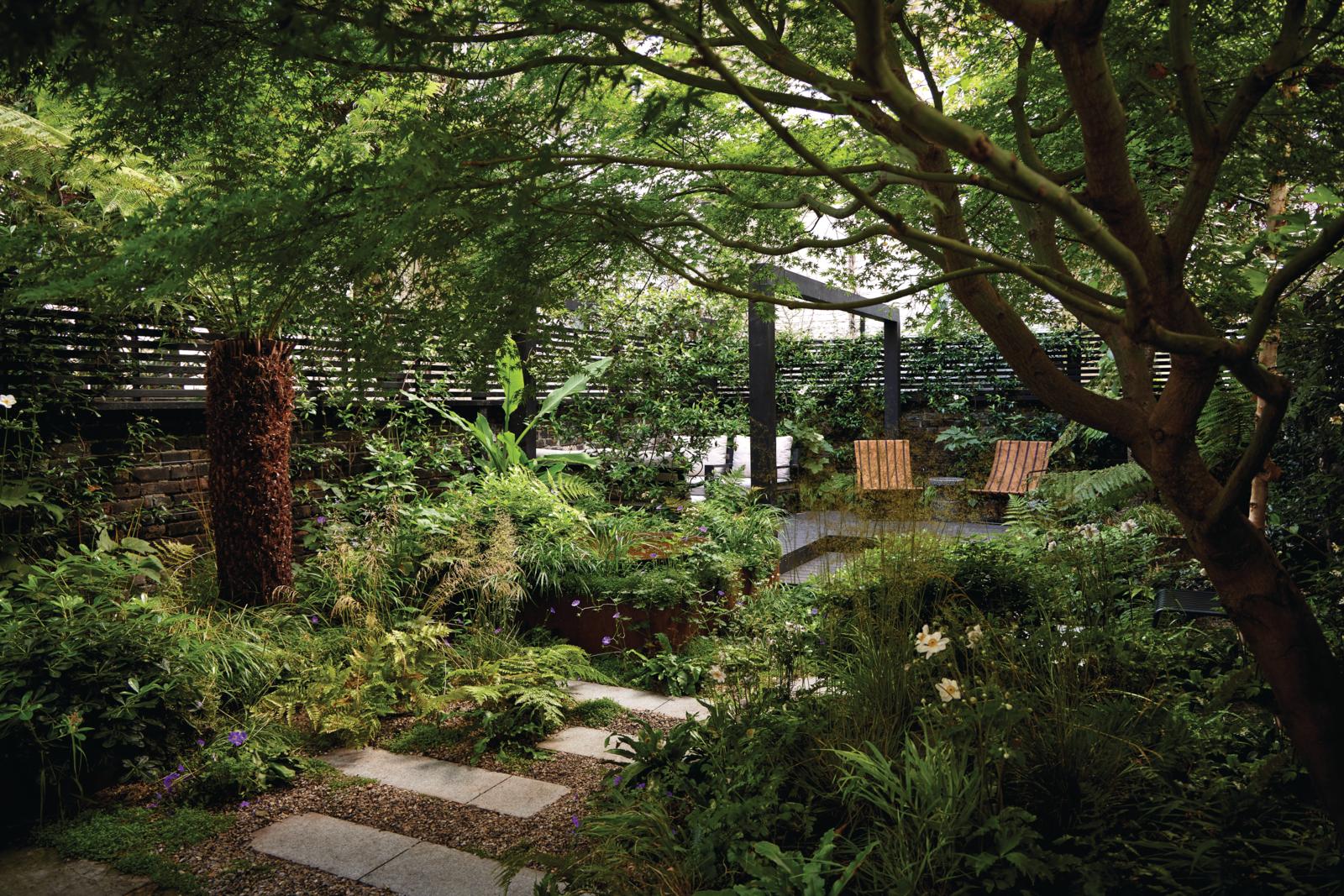
“With small spaces, it’s important not to try to include all the elements,” says designer Alexandra Noble. “Sometimes clients come to me with quite a big wish list and it’s about refining that down.”
Designer Harry Holding suggests a smart solution for how to approach the initial design. “Break it up and have different areas for different moments. You may not have the space for a big dinner party, but you can have a more intimate lunch or a few friends over for a drink – prioritise what you want to get out of the garden, then give the rest over to plants.” He followed his own advice when making this shady London garden by creating a dining area near the house and a seating area at the end, filling the rest with planting.
Every plant counts
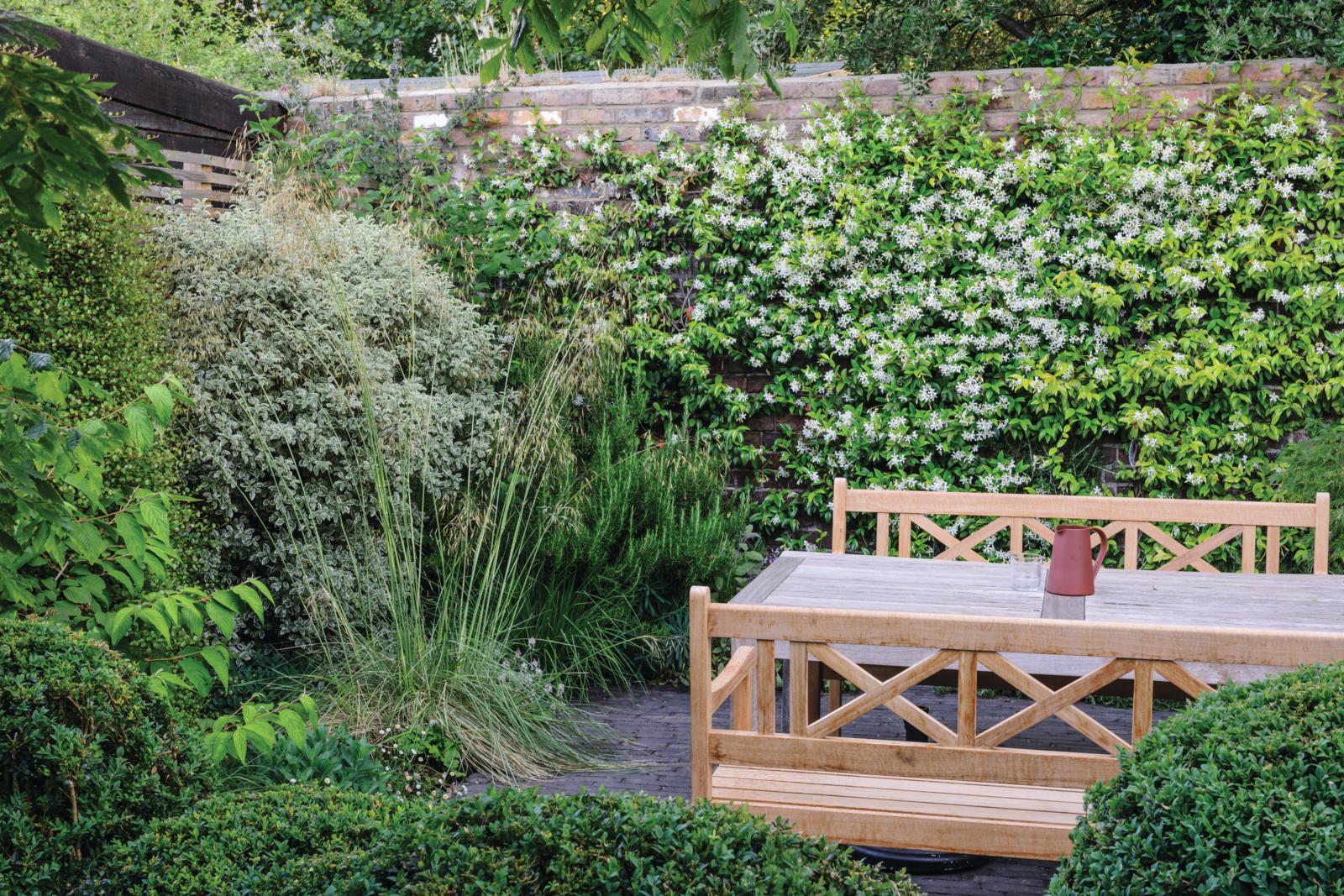
Creating small urban gardens is one of the more challenging aspects of garden design work, says designer Emily Erlam. “Expressing and condensing an essence into a small space is really difficult.” In this plot of just 17m x 5m, it’s impossible not to get up close and intimate. Seating areas and pockets of planting are carefully located to take advantage of the passage of the sun, thus making the best of available light and shade throughout the day.
This cosy, alfresco dining area is enclosed within walls shrouded in Muehlenbeckia complexa and evergreen Trachelospermum jasminoides, underplanted with rosemary and Stipa gigantea. “In a small garden every plant counts, otherwise the balance is disrupted.” The whole effect is a delightful froth of colour, texture and scent.